About Me

Foto saya
juzt a simple man with his three angels....

Jam neh....

Star Rating

Tampilkan postingan dengan label environment. Tampilkan semua postingan

Selasa, 14 April 2009

New Orangutan Population Found in Indonesia


Conservationists discovered a new population of orangutans in a remote, mountainous corner of Indonesia — perhaps as many as 2,000 — giving a rare boost to one of the world's most endangered great apes.
A team surveying forests nestled between jagged, limestone cliffs on the eastern edge of Borneo island counted 219 orangutan nests, indicating a "substantial" number of the animals, said Erik Meijaard, a senior ecologist at the U.S.-based The Nature Conservancy.
"We can't say for sure how many," he said, but even the most cautious estimate would indicate "several hundred at least, maybe 1,000 or 2,000 even."


...

The team also encountered an adult male, which angrily threw branches as they tried to take photos, and a mother and child.
There are an estimated 50,000 to 60,000 orangutans left in the wild, 90 percent of them in Indonesia and the rest in neighboring Malaysia.
The countries are the world's top producers of palm oil, used in food, cosmetics and to meet growing demands for "clean-burning" fuels in the U.S. and Europe. Rain forests, where the solitary animals spend almost all of their time, have been clear-cut and burned at alarming rates to make way for lucrative palm oil plantations.
The steep topography, poor soil and general inaccessibility of the rugged limestone mountains appear to have shielded the area from development, at least for now, said Meijaard. Its trees include those highly sought after for commercial timber.
Birute Mary Galdikas, a Canadian scientist who has spent nearly four decades studying orangutans in the wild, said most of the remaining populations are small and scattered, which make them especially vulnerable to extinction.
"So yes, finding a population that science did not know about is significant, especially one of this size," she said, noting that those found on the eastern part of the island represent a rare subspecies, the black Borneon orangutan, or Pongo pygmaeus morio.
The 700-square mile (2,500-square kilometer) jungle escaped the massive fires that devastated almost all of the surrounding forests in the late 1990s. The blazes were set by plantation owners and small-scale farmers and exacerbated by the El Nino droughts.
Nardiyono, who headed The Nature Conservancy's weeklong survey in December, said "it could be the density is very high because after the fires, the orangutans all flocked to one small area."
It was unusual to come face-to-face with even one of the elusive creatures in the wild and to encounter three was extraordinary, he said, adding that before this expedition, he had seen just five in as many years.
Conservationists say the most immediate next step will be working with local authorities to protect the area and others that fall outside of national parks. A previously undiscovered population of several hundred also was found recently on Sumatra island, home to around 7,000.
"That we are still finding new populations indicates that we still have a chance to save this animal," said Paul Hartman, who heads the U.S.-funded Orangutan Conservation Service Program, adding it's not all "gloom and doom."
Noviar Andayani, head of the Indonesian Primate Association and Orangutan Forum, said the new discoveries point to how much work still needs to be done to come up with accurate population assessments, considered vital to determining a species' vulnerability to extinction.
"There are many areas that still have not been surveyed," she said, adding that 18 private conservation groups have just started work on an in-depth census based on interviews with people who spend time in the forests.
They include villagers and those working on plantations or within logging concessions.
"We hope this will help fill in a few more gaps," said Andayani, adding that preliminary tests in areas where populations are known indicate that the new interview-based technique could provide a clearer picture than nest tallies.
"Right now the information and data we have about orangutans is still pretty rudimentary," she said.
Some experts say at the current rate of habitat destruction, the animals could be wiped out within the next two decades.


Read more / Selengkapnya...

Senin, 26 Januari 2009

Endangered Species

What are Endangered Species?

Rare, endangered, or threatened plants and animals are elements of our natural heritage that are declining rapidly or are on the verge of vanishing. They are plants and animals that exist in small numbers that may be lost forever if we do not take quick action to stop their decline. If we cherish these species, like we do other rare and beautiful objects, these living organisms become treasures of the highest magnitude.
Why Preserve Endangered Plants and Animals?
Preservation of plants and animals is important, not only because many of these species are beautiful, or can provide economic benefits for us in the future, but because they already provide us many valuable services. These organisms clean air, regulate our weather and water conditions, provide control for crop pests and diseases, and offer a vast genetic "library" from which we can withdraw many useful items.
...

Extinction of a species could potentially mean the loss of a cure for cancer, a new antibiotic drug, or a disease-resistant strain of wheat. Each living plant or animal may have values yet undiscovered. Scientists estimate there are thirty to forty million species on earth. Many of these species are represented by dozens of genetically distinct populations. We know very little about most species; less than two million are even described. Oftentimes, we do not even know when a plant or animal becomes extinct. Game animals and a few insects are watched and studied. Other species need attention too. Perhaps in them may be found a cure for the common cold or a new organism that will prevent millions of dollars of loss to farmers in their constant fight against crop diseases.

There are many examples of a species' value to society. An antibiotic was discovered in the soils of the threatened New Jersey Pine Barrens Natural Area. A species of perennial corn was found in Mexico; it is resistant to several diseases of corn. An insect was discovered that when frightened produces an excellent insect-repelling chemical.

Why Have Species Become Endangered?
  • Habitat Loss
Loss of habitat or the "native home" of a plant or animal is usually the most important cause of endangerment. Nearly all plants and animals require food, water, and shelter to survive, just as humans do. Humans are highly adaptable, however, and can produce or gather a wide variety of foods, store water, and create their own shelter from raw material or carry it on their backs in the form of clothing or tents. Other organisms cannot.
Some plants and animals are highly specialized in their habitat requirements. A specialized animal in North Dakota is the piping plover, a small shorebird which nests only on bare sand or gravel on islands of rivers or shorelines of alkali lakes. Such animals are much more likely to become endangered through habitat loss than a generalist like the mourning dove, which nests successfully on the ground or in trees in the country or city.
Some animals are dependent on more than one habitat type and need a variety of habitats near each other to survive. For example, many waterfowl depend on upland habitats for nest sites, and nearby wetlands for food supplies for themselves and their broods.
It must be emphasized that habitat does not have to be completely eliminated to lose its usefulness to an organism. For example, the removal of dead trees from a forest may leave the forest relatively intact, but eliminate certain woodpeckers that depend on dead trees for nest cavities.
The most serious habitat loss totally changes the habitat and renders it unfit for most of its original resident organisms. In some areas, the greatest changes come from plowing native grasslands, draining wetlands, and constructing flood-control reservoirs.
  • Exploitation
Direct exploitation of many animals and some plants took place before conservation laws were enacted. In some places, exploitation was usually for human food or furs. Some animals, such as Audubon's sheep, were hunted to extinction. Others such as the grizzly bear, maintain remnant populations elsewhere.
  • Disturbance
The frequent presence of man and his machines may cause some animals to abandon an area, even if the habitat is not harmed. Some large raptors, like the golden eagle, fall into this category. Disturbance during the critical nesting period is especially harmful. Disturbance combined with exploitation is even worse.
What Are The Solutions?

Habitat protection is the key to protecting our rare, threatened, and endangered species. A species cannot survive without a home. Our first priority in protecting a species is to ensure its habitat remains intact.

Habitat protection can be done in a variety of ways. Before we can protect a plant's or animal's habitat, we need to know where this habitat is found. The first step, then is to identify where these vanishing species are found. This is being accomplished today by state and federal agencies and conservation organizations.

Second to identification is planning for protection and management. How can the species and its habitat be best protected, and once protected, how can we make sure the species continues healthy in its protected home? Each species and habitat is different and must be planned on a case-by-case basis. A few protection and management efforts have proven effective for several species, however.

Legislation was passed to protect the most endangered species in the United States. These special species cannot be destroyed nor can their habitat be eliminated. They are marked in the endangered species list by an *. Several federal and state agencies are beginning to manage threatened and endangered species on public lands. Recognition of private landowners who have voluntarily agreed to protect rare plants and animals is underway. All these efforts need to continue and be expanded to keep our natural heritage alive.

Read more / Selengkapnya...

The African House Snake

Red phase House Snake from Botswana


hatching albino "Zululand" House Snakes


hatchling "Zululand" House Snakes


red phase male

cinnamon phase female about to swallow a mouse

L. inornatus


Lamprophis aurorae

L. fuliginosus


L. aurorae


Striped House Snake


Albino House Snake


...


normal and albino "Zululand" House Snakes


juvenile brown phase African House Snake


juvenile green phase African House Snake

Read more / Selengkapnya...

The Defense Methods of Spiders

In the world, there is one type of creature that most people are afraid of, Spiders. Ever since I was younger, I have always enjoyed keeping and watching spiders. If more people would study spiders, they would find out there is lots about spiders that is very interesting. There are species of spiders that are prey - specific prey - catching. The types of species are known as araneophagic salticids. Another thing about spiders that people don't realize is that spider have defense maginisms to protect them from predators, such as, flicking their hairs off their abdomen. Reproduction for spiders can be very dangerous and challenging for the male. When males are ready to mate, they have to be careful so that they don't either get cannibalized or chased either by the female or another male.
Spiders have prey preference
All spiders are predators and have prey - catching behaviors which are different. In spiders, there are two different types of predators. One is the stenophagous and the other is euryphagous. The stenophagous predators behavior may or may not be specialized being prey - specific prey - catching. The euryphagous predators behavior is not as specialized as what their diet is. This type of predator may be specialized in prey - catching but not specialized in their diet. There is two types of jumping spiders which have stenophagous behavior, one is ant - eating species and the other is spider - eating species. Both have certain ways they catch their prey. When the ant - eating species catch their prey they must be careful so that they don't get killed in the process. An ant is an insect which most species of spiders will not choose for prey. The spider - eating species uses the web of the prey to catch their prey. First thing for them to do is to get on the web without making the web move, instead of walking across the whole web to catch the prey they stay in one place and jiggle the web so the prey thinks it is prey for them. The species of spiders that use their prey's web to catch them are known as araneophagic salticids which are Brettus adonis, Brettus cingulatus, and Gelotia lanka from Sri Lanka; Cyrba algerina from Southern Europe; Cyrba ocellata from Australia, Kenya, Sri Lanka, and thailand; and five species of Portia which are P. africana and P. schultzi from Kenya, P. albimana from Sri Lanka, P. labiata from Malaysia and Sri Lanka and P. fimbriata from Australia, Malaysia, and Sri Lanka. These types of spiders also catches prey which are outside of the webs, then invades another spiders web which it uses aggressive mimicry and catches the resident spider and takes insects and resident spider eggs also.
...

One species of spiders uses a cryptic stalking motion to catch the salticids. This spider is in Queensland, Australia known as Portia fimbriata. When P. fimbriata moves in a web, it moves very slowly and when detected it is too late for the salticid to escape. Salticids have secondary eyes which are good movement detectors and if it sees the P. fimbriata it moves around a lot to figure out what is behind it. If this happens, the P. fimbriata totally stands still until the salticid turns away again. P. fimbriata may have to be concerned with the size and type of prey to eat because a salticid which is large maybe able to either injure or kill the P. fimbriata. The size of the meal is more important to females then males. Females are normally bigger then males and have a greater need for large food and are more ready to take a risk getting their prey.
There were tests done on the feeding habits of the P. fimbriata. In the tests, the female P. fimbriata ate web building spiders and salticids more often then eating insects, but they preferred to eat salticids over web building spiders. There was a test done to see if the P. fimbriata female would take a web building spider over an insect. Most of them would drop the insect and take the web building spider. Another test done was to find if the P. fimbriata female would take an insect over an salticid. The P. fimbriata female would drop the insect for the salticid. Another test done was with size of prey they would eat. Sizes were very small, small, and large web building and salticids. The P. fimbriata females ate small species more often then very small species. Also they ate large species more often then small species. With males they resembled females by attacking spiders first more often then attacking insects. With both male and female P. fimbriata, they ate salticids more often then web building spiders. Males ate small spiders more often then very small spiders like female, but males are different in eating small spiders more often then large spiders. In all tests done with insects, the P. fimbriata also took spiders over insects. Portia is a genus of salticids which studied in nature feed mostly on web building spiders. The behavior of Portia salticids are prey - specific prey - catching against web building spiders. These types of predators have an unusual diet and evolved prey - specific prey - catching behavior for certain types of prey. Species of spiders that eat prey which can be dangerous to them have prey - specific prey - catching behavior and have distinctive preferences for unusual and dangerous prey. Studying males in nature, they often feed on the same types of web building spiders as females do and also use same behaviors as females, prey - specific prey - catching. Both male and female P. fimbriata prefer web building spiders over insects but often prey on cursorial salticids. They both use cryptic stalking to catch the cursorial salticids. When catching prey, females are more effective then males. When P. fimbriata catches prey it first touches the prey with its forelegs, and slowly moves over the prey and bites it. Most all species of Portia studied seldom leaps on any kind of prey.
Defense Behaviors
There are species of spiders that use their urticating hair on their dorsum of the abdomens for defense. When they use hair for defense, they release their hairs by using their hind legs. Then they rub their abdomen with their hind legs and the hairs fly off their abdomen and hit what they are protecting them selves from. The main species of spiders that use this defense are the Mygalomorph. These hairs are found in different places on different spiders. The hairs on the genus Ephebopus are found on a distinctive pad on the distal prolateral surface of the pedipalpal femur. One genus of Mygalomorph which has hairs on the abdomen has never been recorded with hair flicking, this is the genus Aviculariinae. According to the Bertani and Marques 1995/1996 article, the mechanism which releases the hairs are still not known very well. Aviculariinae have five species which they insert urticating hairs by direct contact with the predator, reported by Bertani and Marques. There were tests done on certain spiders, these were Avicularia avicularia, Avicularia walckenaeri, Avicularia sp., Pachistopelma rufonigrum, Theraphosinae, Acanthoscurria atrox, Vitalius sorocabae, Lasiodora klugi, Grammostola actaeon, and Theraphosa blondi. These species were studied in the Laboratorio de Artropodos of the Instituto Butantan, Sao Paulo. To test this defense behavior in the laboratory, they were touched with forceps or tip of a finger which caused them to respond. All tests were recorded to study the defense method in greater detail. The main species that showed the hair flicking defense was the Theraphosinae spiders. To flick their hairs, they lifted either one or both hind legs on the dorsum of the abdomen and kicked the hair off them. With the Aviculariinae species, they have well developed claw tufts at ends of legs to help them hold on to the object and directed their abdomen toward the object. The Aviculariinae turned its abdomen toward the object and rubbed it against the object. After hairs hit the skin, they penetrate into the skin slowly and embeds completely after one to two days. This species would only use the rubbing method for defense if they were in their silk webs but if out of the web, they would take a flight and run across the cage floor or climb the walls. Theraphosicae have many spines on their legs which help to comb the hairs to flick them off the abdomen. Theraphosicae are the only group that can flick and shed their hairs. Many hairs still remain attached while others are combed off the abdomen. The Aviculariinae do not have spines on their legs like the Theraphosidae, but a few have apical spines. There is a difference in size and types of hairs between Theraphosidae and Aviculariinae. The Theraphosidae have type I, type III, and type IV. Type I hairs are 0.2 to 0.6 mm in length, type III hairs are 0.3 to 1.2 mm in length , and type IV hairs are 0.06 to 0.2 mm in length. Most of the hair are thin, short, and flow by air. Aviculariinae spiders have two types of hair, type II and type V. Type II are only found in the abdomen of the genera Avicularia, Pachistopelma, and Iridopelma. Type II are 0.5 mm in length which are longer than the other hairs. They are also stout and have many small, scale-like barbs. When this type are scraped off the spider, they do not get carried by air but fall to the ground instead. The penetrating tip of the hair in type II are directed downwards which in type I, type III, and type IV are directed upward. The type II hairs are only released when the abdomen of the spider is touched and the penetrating tip rises up to come in contact with the object that touched it. The next type of hair are type V which are short and stout, with many barbs and are easily blown thru the air. The types of hair have different structures and release in different ways. These urticating hairs are the same size as cactus thorns and when they touch the skin, you can't see them but sure can fill them.
Reproduction in Spiders
Female spiders can have multiple mating. Males have to be concerned about this because they have to make sure that their sperm fertilizes the eggs and not by another male. To prevent this from happening, the male has to ejaculate lots of sperm and prevent the female from attracting other males. To stop the female from attracting other males, males can physically repell them by placing obstructions over her genital opening, or by transferring chemical compounds that induce refractory period which female will not be sexually receptive anymore. There is a period where mate guarding is used until onset of refractory period begins. Male spiders using mechanisms that enable the female to mate with other males have been reported by Austad 1984, Christenson et al. 1985, Suter 1990, Watson 1991, Dodson and Beck 1993, Eberhard et al. 1993, Masumoto 1993, Uhl 1993, and Prenteret al. 1994. Watson 1986 found a species of spider that used a sex attracting pheromone that destroyed the web of the female, which was the male Linyphia litigiosa. Another type of male spider studied by Masumoto 1993, used a copulatory plug during mating which inhibits the transfer of sperm by other male spiders, this species are known as the Agelena limbata. Many male species stay around the female after mating to repell off other males. Andrade 1996 found that male redback spiders sexually cannibalize to reduce the proportion of eggs that were fertilized by subsequently mating.
Many females after mating go into the refractory period and are not sexually receptive to other males that are around her, this is common in most insects also. This type of period has not totally been widely documented for spiders. The multiple mating by females are more likely to be in gregarious spiders then solitary spiders. More males are attracted by female gregarious because of the aggregation which males can move easily among these females. A gregarious spider which form aggregation of orb webs share structural threads like other females, this spider is known as Gasteracantha minax which is the Australian jewel spider. A female G. minax spiders can be surrounded by several courting males which wait at edge of her web for her to react for mating. Without leaving the aggregation, the males can count several females. Before mating, court male G. minax locates the female web and constructs a mating thread from the vegetation of the edge of the female web. Then the male goes halfway up the thread with his first and second pair of legs. The female eventually moves out onto the thread toward the male. The male and female touches legs before the male grabs her tightly and clasps her ventral surface of her abdomen with his legs. The male then places one of his palps adjacent to the females epigyne, inserts his embolus, and transfers sperm. Then they take less then a minute interval which the female returns to central hub while male is still attached. Eventually male leaps away from female by the thread attached to the web. The male then courts the female a second time and inserts the embolus from his other palp. For more details on the mating and courtship behavior among these spiders refer to Mascord 1970 and Robinson and Robinson 1980. Different species of orb weaving maybe different in sexual dimorphism. In some species, females maybe larger in the order of magnitude then males. Usually females are at least one and a half times bigger in size then males and court of a mating thread is less pronounced in different species. During mating the female G. minax are three times the weight size of the male G. minax which is surprising for the courtship behavior. Elgar and Bathgate did some experiments to investigate the way male G. minax reduce the females to remate. To do this Elgar and Bathgate introduced males at different times during the courtship and mating sequence. They also did another experiment study on the influence of male-male competition and sexual cannibalism on sexual dimorphism.
The amount of G. minax spiders were counted in late December 1992 and early January 1993 on the coastal salt marsh fringe of Port Philip Bay at Williamstown, Victoria. Then Elgar and Bathgate counted the number of males and females on solitary or aggregated webs that were bisected by the transect lines. They also collected immature males and females from this group. Elgar and Bathgate put the immature males and females in individual containers in the laboratory for them to mature. These spiders were feed bush flies known as Lucilia cuprina. The mature females were weighed on an electronic balance and transferred into a enclosed perspex mating frame with the measurements of 70 x 50 x 10 cm.Within a few days, the females built a complete orb web. Most females used in the study weighed 38.3 mg. The males were weighed on the days that they were used for mating. The average weight was 13.7 mg for males. For Elgar and Bathgate to test the relationship between female receptivity and male mate-guarding behavior then introduced the males either while mating was going on or the following day after mating. One test was to add one male only to a virgin female and he was either removed after successfully doing both pedipalp insertions or left in mating frame overnight with the female. The next test was to release one male into the mating frame with a virgin female then releasing the second male in the same mating frame either during first or second pedipalp insertion of the first male or male released into the mating frame with solitary female the next day after mating occured. These types of testing were done to see what happens with courtship, copulation, and aggressive behavior of males and females at different times of mating. When putting males in with females, they were put on the base of the mating frame which then the males would find the female orb webs themselves by walking up the side of the frame. Elgar and Bathgate would record the time the male got to the orb web. Copulation was initiated and ended when female would chase the male and the males would chase the rival males. For Elgar and Bathgate to tell what male was whom, they would either tell by size or natural markings.
The results of Elgar and Bathgates experiments, the adult and immature G. minax female spiders per aggregation at Williamstown was 3.1 and for male adult G. minax per aggregation was 1.6. There were nine females and four males that were the largest aggregation. Between number of females and number of males there were positve correlation found within aggregations. When Elgar and Bathgate did these experiments, they found out it was hard to estimate the number of adult males per female for each aggregation because they could not always tell which females the males congregated. The mean of adult males per solitary females were 1.45. The solitary females had at least one male and one of these females had three males on the periphery of her web. It took about 20.2 minutes for the male G. minax to locate the orb web of the female G. minax and then the female would capture and cannibalize the male before he could embrace her, this happened in three of thirty trials. The males that were cannibalized by females did not have a different weight from those males that avoided being cannibalized. The females that were cannibalistic did not have a weight difference from females that were noncannibalistic. There was also no differences in behavior in the males that were either cannibalized or noncannibalized. Elgar and Bathgate defined the duration of copulation as the time when the male first embraced the female to when he leapt away from her. The duration copulation had a positive correlation with that of the second compulation when female encountered a single male. The duration of either first or second copulation was not significantly correlated with either male or female size. There were also no difference in duration of first copulation with either virgin females or mated females with mating males.
Studing in the field, males that were already on the female orb web would pluck or pull silk threads to get rid of intruding males. These aggressive interactions would work when one male would retreat and go to the edge of the orb web. This also happenend in the laboratory when other males were introduced to the orb web. In the lab, the males that were already there would chase the other males off the web. The time between first and second copulation was 22.7 minutes when there was no other males in the web. When other males were present, the time was shorter. The duration of the second copulation was influenced when other males were present. When no other males were present, the duration of the second copulation were longer then the first copulation but if another male was present, it was not much different.
Female G. minax would mate several times if she was not mated the day before. For male to mate with a female after she mated before, the courtship must be within an hour after previous mating. Females would chase the males off more frequently if they were mated a day before compared to within the hour. Males reacted to other males more often it they would be in the web the same time they were copulating then if the male entered the web the following day. The male left overnight with the female would move off the orb web by the next morning. When male spiders mate, there are things they have to be careful so that they don't get cannbalized by the female or chased off by either another male or the female. For spiders to survive, they must have different methods to defend themselves. Spiders all are very defensive when it comes to catching prey, protecting themselves from predators, and when they are ready to reproduce.
Read more / Selengkapnya...

Common marmoset (Callithrix jacchus)

SOCIAL ORGANIZATION AND BEHAVIOR

Though they have been studied in captive settings since the 1960s, the social structure of wild common marmosets is less well known than other reproductive and behavioral characteristics (Digby 1995; Ferrari & Digby 1996). Long thought to be monogamous, evidence from recent field studies shows that they have a social structure that revolves around a stable, extended family unit with a few dominant breeding individuals and flexible mating behavior (Digby & Barreto 1993; Digby 1995; Ferrari & Digby 1996; Sussman 2000). Groups of common marmosets range in size from three to 15 animals, but usually have about nine members (Stevenson & Rylands 1988; Ferrari & Lopes Ferrari 1989). Within the group, three generations are often encompassed including one or two breeding females with one breeding male and related adults (possibly parents or siblings) and the breeding pairs' offspring (Ferrari & Digby 1996). Using genetic evidence to tease apart the relationships within a group of common marmosets, it has been demonstrated that females within a group are closely related (as close as mother/daughter or sisters) while breeding males are distantly related, and probably immigrated from another group. When males are closely related to breeding females, they do not breed with them (Nievergelt et al. 2000). Unlike many other primate species, emigration does not occur during adolescence in common marmosets. Instead, they remain in their group until they are adults and then the males leave the group to find breeding females. Emigration by adults is balanced by recruitment through births, keeping the group size relatively stable over time, though very little is known about when and why adult common marmosets leave their groups (Ferrari & Digby 1996). Group stability is compromised in the wild because the death of a breeding adult will cause a group to break up and separate into new groups (Lazaro-Perea 2001).
...

Social status within the group is linked to breeding status, and while the breeding pair is usually codominant, if there is more than one breeding female, one of the breeding females is dominant over the other. For nonbreeding individuals, the dominance hierarchy is age-graded and sex is not a factor (Digby 1995). Dominant individuals displace others at feeding sites and exhibit a variety of postures, vocalizations, and behaviors that include open-mouth threats, nips, cuffs, lunges, grabs, ear-tuft flicks, genital presenting, chasing, and biting (Abbott 1984; Digby 1995). They are the center of social life in the group and subordinate animals favor being in proximity with dominant individuals and groom them preferentially (Digby 1995).


Photo: Ludwig Miller

One of the defining social behaviors of common marmosets is their system of cooperative breeding and infant care (Digby & Barreto 1993; Digby 1995; Sussman 2000). The breeding adults in the group depend on the cooperation of their adult siblings and offspring to care for their new infants to ensure their survival. This requires behavioral and physiological reproductive suppression of adult and developing females and behavioral reproductive suppression of adult and developing males in the group by the breeding pair, a phenomenon that has been well studied among captive common marmosets (Saltzman et al. 1997; Baker et al. 1999). In response to a dominant, unrelated, female, submissive common marmosets become anovulatory while her daughters may continue to cycle (Ziegler &de Sousa 2002). Rather than dispersing, finding a breeding partner, and forming a new group, subordinate marmosets that are sexually mature and could otherwise mate stay within the family unit. This strategy may be beneficial under certain ecological conditions. For example, where marmosets live in extremely high population densities, dispersal may not be possible because of lack of available territory and hostile encounters with other marmoset groups in the area or high chance of predation if ranging solitarily (Dietz 2004). Staying within the group, at least for a while, to help raise their nieces and nephews or siblings may be the best choice to maximize fitness. Because these helpers are likely related to the dominant female, it is within their interest to ensure the survival of her offspring because they are also related to them and the survival of the infants increases the related caregiver's inclusive fitness (Saltzman et al. 1997).

REPRODUCTION

Sexual behavior and reproductive parameters are often skewed in captivity compared to natural conditions and as such, data from laboratory settings often must be substantiated by observations and tests from wild animals. The common marmoset is no exception, though recently there have been advances in hormonal monitoring techniques resulting in data from wild common marmosets (Albuquerque et al. 2001).

Photo: Gustl Anzenberger

The mating patterns of wild common marmosets are exceptionally complex and vary over time. While monogamy was long thought to be rule among common marmosets because of captive studies, there have been observations of polygyny, polyandry, and monogamy in the wild (Digby 1995; Nievergelt et al. 2000). Field data support that most mating is monogamous and when two females are pregnant within a group, it is because the subordinate female, the daughter of the dominant female, mated with a male from a neighboring group. The non-dominant female is not fully reproductively suppressed, but her pregnancy does not result in viable offspring (Digby 1999; Nievergelt et al. 2000; Arruda et al. 2005). Even though the subordinate females lose their infants, this pattern of mating with extra-group males may be a strategy to identify potential future mates. This is supported because subordinate females that mated successfully but did not produce viable offspring emigrated from their natal groups shortly after and joined another group, assuming a breeding position (Arruda et al. 2005).

Menarche occurs between nine and 14 months of age but common marmosets do not menstruate nor are there any external signs of ovulation. The ovarian cycle lasts between 24 and 30 days, but averages 28 days (Hearn 1982; Kendrick & Dixson 1983). In captivity, in the presence of a dominant female, unrelated young female marmosets generally will not ovulate and though they are sexually mature, they do not cycle and are unable to breed, but the dominant female's daughters do exhibit ovarian cyclicity even if they do not mate (Abbott 1984; Ziegler &Sousa 2002). Under natural conditions, the presence of two breeding females has been observed, but the females are always closely related, either mother and daughter or sisters (Digby & Barreto 1993; Nievergelt et al. 2000; Arruda et al. 2005). For females, the mechanism by which this occurs is both behavioral and physiological but variations in reproductive suppression are not well understood. That is, it is unclear why in most but not all circumstances only one female breeds while in other instances there are two breeding females (Saltzman et al. 1997). One factor that contributes to the suppression of ovulation in subordinate female common marmosets is the presence of a related male. In laboratory studies, young adult females do not ovulate or exhibit sexual behavior in the presence of their fathers, probably a defense against inbreeding, but if the biological father is replaced by another adult male, within a few weeks ovulation occurs coupled with sexual solicitations and an increase in aggressive behavior towards their mothers (Abbott 1984; Saltzman et al. 1997). One explanation for this is daughters are trying to displace their mothers as the dominant breeding female in their group and have more opportunities to mate and increase their overall fitness.

Once the social conditions are suitable for a female to begin breeding, common marmosets reproduce consistently over the remainder of their adult lives. Females solicit mating by tongue-flicking displays directed at males. Common marmosets mate throughout their ovarian cycle but the majority of mating occurs in a three- to four-day window on either side of ovulation (Kendrick & Dixson 1983). Gestation lasts about five months (143 to 153 days) and soon after parturition (within 10 days), female marmosets begin to cycle again and shortly thereafter become pregnant (Lunn & McNeilly 1982; Sussman 2000). The interbirth interval exhibited by common marmosets is five months and they give birth twice each year (Stevenson & Rylands 1988). Common marmosets exhibit a high degree of birth seasonality in the wild and have two birth peaks during the year; during September, October, and November as well as April, May, and June (Stevenson & Rylands 1988). One of the major factors thought to influence this strict seasonality is rainfall, which directly affects food availability (Di Bitetti & Janson 2000). Common marmosets give birth at the end of the dry season and at the end of the rainy season to maximize food availability. Because nursing is so energetically costly, females need to minimize the nutritional stress they experience by rearing their infants during periods of relative food abundance (Di Betetti & Janson 2000). Additionally, the pattern of habitual twinning among common marmosets means nursing and rearing infants is even more energetically taxing. Common marmosets do not always give birth to twins; they also have single births and triplets. The reproductive patterns of common marmosets would not be possible if there were not special adaptations to infant rearing and parental care.


PARENTAL CARE


Group support for developing infants is necessary among common marmosets. Twins are often 20 to 27% of the mother's total body weight; this is the equivalent of a 135-pound woman giving birth to two 16-pound babies. A female would not be able to care for infants alone because of the high demands of pregnancy and lactation as well as the mechanical difficulties of carrying two heavy infants, therefore all age-sex classes contribute to infant survival and development among common marmosets (Stevenson & Rylands 1988; Rothe et al. 1993; Tardif et al. 1993; Kinzey 1997). As discussed previously, compliance with cooperative rearing is probably linked to kin selection and fitness. The non-reproductive helpers in the group are probably related to the infants because they are related to the breeding female. It is within their interest to ensure the survival of her offspring because this increases the helper's inclusive fitness (Rothe et al. 1993; Saltzman et al. 1997). Studies on captive marmosets indicate that survival rate increases as number of non-reproductive helpers increases, up to a point. The highest survival rate of infants (95.7%) is found in groups of 10 common marmosets (the breeding pair and eight helpers) (Rothe et al. 1993). Interestingly, the average group size in the wild is about nine members.


Photo: Gustl Anzenberger

From birth, common marmosets have a very strong cling reflex and do not voluntarily leave their carrier's back for the first two weeks of life. They are very active starting in the second week, crawling on their carrier's back and investigating their surroundings (Stevenson & Rylands 1988). Immediately after birth, the breeding male and presumptive father of the infants begins to carry the twins and caregiving by offered by the father, mother, or other members of the group (Yamamoto 1993). Over the following weeks, time off the backs of carriers gradually increases and the infants develop locomotory behaviors and coordination and begin to exhibit play behavior (Stevenson & Rylands 1988). By about three months of age, the infants are almost completely weaned and are capable of self-feeding, though they do not gnaw their own holes to feed on gum but rather lick the holes created by older individuals (Stevenson & Rylands 1988). The infancy stage lasts until about five months of age and is followed by the juvenile period, which lasts between five and 10 months (Stevenson & Rylands 1988; Yamamoto 1993). By five months, common marmoset juveniles are 75% of their adult weight. Interaction with other group members besides parents is emphasized and play becomes rougher as future status is worked out. During the juvenile period, another set of infants is usually born and carrying and play with infants also characterizes this period of development (Yamamato 1993). Between nine and 14 months, the sub-adult stage begins, characterized by the full repertoire of adult behaviors as well as puberty. By 15 months, common marmosets have reached their adult weight and are capable of reproduction but do not reproduce until social conditions are adequate (Yamamato 1993).


COMMUNICATION

Like all primates, vocal and visual communication is important to common marmosets. Facial expressions and vocalizations convey information about social status, emotional state, and intent to other individuals (Stevenson & Rylands 1988). Because of their small size and the natural habitats they are found in, visual signals are important in close-range communication while vocal communication is more important over longer distances (Jones 1997). Some expressive facial and postural positions include the "partial open mouth stare," "frown," and "slit-stare" which are used to signify alarm, aggression, and submission. When common marmosets flatten their ear-tufts close to their heads in "tuft-flatten" position, this signifies submission, fear, and sometimes curiosity of new objects (Stevenson & Rylands 1988).

Photo: Ludwig Miller

Common marmosets use vocal signals in a variety of situations including in response to unexpected movements and in threatening situations (Jones 1997). Alarm calls in response to sudden movement include "staccatos," which are a series of short ascending calls, and "tsiks," that are brief descending calls given either alone or in a series. Alarm calls are brief, high-pitched vocalizations that elicit fleeing behavior from other group members and are given in response to threatening situations (Lazaro-Perea 2001). There are some calls that are generally used and which lack obvious contextual connection including "phee" and "trill" calls (Jones 1997). "Phee" calls have high sound intensity and sound like very loud, high pitched whistles. They are usually given in a series of one to five notes that last about two seconds each. They are important for long-range vocal contact and play a role in mate attraction, maintenance of group cohesion, territorial defense, and location of lost group members (Jones 1997). "Trill" calls are also generic vocalizations, but sound much different from "phees." They have lower pitch and have cyclic frequency fluctuations that give them a distinctive vibrato sound. These calls are given by all animals of any age, sex, and status and their main purpose probably is to monitor group members by identifying and locating their position in low visibility areas (Jones 1997).

Unlike the apes and Old World monkeys, smell is very important to New World monkeys. They have a specialized organ in their nasal cavity called the vomeronasal organ that allows them to process chemical signals in a focused manner and discern information about other animals (Evans 2003). Because of the presence of this "second nose," scents are very important tools of communication in New World monkeys, and common marmosets convey information by marking objects with secretions from specialized scent glands on their chests and around their anus and genitals (Lazaro-Perea et al. 1999). The main information conveyed by scent-marking includes demarcating home range and resources within that range, signifying social status, and advertising reproductive status (Stevenson & Rylands 1988; Lazaro-Perea et al. 1999; Ziegler et al. 2005).
Read more / Selengkapnya...

Can Animals Sense Natural Disasters?

On December 26, 2004, an earthquake along the floor of the Indian Ocean was responsible for a tsunami that claimed the lives of thousands of people in Asia and East Africa. In the midst of all the destruction, wildlife officials at Sri Lanka's Yala National Park have reported no mass animal deaths. Yala National Park is a wildlife reserve populated by hundreds of wild animals including elephants, leopards, and monkeys. Researchers believe that these animals were able to sense the danger long before humans.
...

Can Animals Sense Natural Disasters?
Animals have keen senses that help them avoid predators or locate prey. It is thought that these senses might also help them detect pending disasters. Several countries have conducted research on the detection of earthquakes by animals. There are two theories as to how animals may be able to detect earthquakes. One theory is that animals sense the earth's vibrations. Another is that they can detect changes in the air or gases released by the earth. There has been no conclusive evidence as to how animals may be able to sense earthquakes. Some researchers believe the animals at Yala National Park were able to detect the earthquake and move to higher ground before the tsunami hit, causing massive waves and flooding.
Other researchers are skeptical about using animals as earthquake and natural disaster detectors. They site the difficulty of developing a controlled study that can connect a specific animal behavior with an earthquake occurrence. The United States Geological Survey (USGS) officially states: *Changes in animal behavior cannot be used to predict earthquakes. Even though there have been documented cases of unusual animal behavior prior to earthquakes, a reproducible connection between a specific behavior and the occurrence of an earthquake has not been made. Because of their finely tuned senses, animals can often feel the earthquake at its earliest stages before the humans around it can. This feeds the myth that the animal knew the earthquake was coming. But animals also change their behavior for many reasons, and given that an earthquake can shake millions of people, it is likely that a few of their pets will, by chance, be acting strangely before an earthquake.
Although scientists disagree as to whether animal behavior can be used to predict earthquakes and natural disasters, they all agree that it is possible for animals to sense changes in the environment before humans. Researchers around the world are continuing to study animal behavior and earthquakes. It is hoped that these studies will help to aid earthquake predictions.
Read more / Selengkapnya...

Why Are Amphibians Dying?

Source: U.S. Geological Survey


Researchers from the U. S. Geological Survey (USGS) are on the verge of determining why U.S. amphibians are dying en masse. They believe that disease outbreaks are a contributing factor in the decline of amphibian populations. The researchers have identified two types of diseases that are largely responsible. One is caused by an iridovirus and the other is caused by a chytrid fungus. Information from the original news release about the study is reported below.


"Boreal toad. Photographer: Stephen Corn, USGS. Boreal toad (Bufo boreas boreas) from Rocky Mountain National Park, Colorado (federal candidate species; listed as endangered by the state of Colorado; the species has undergone about an 80 percent decline in the southern Rocky Mountains)."

...

--U.S. Geological Survey (USGS) scientists are making headway in unraveling clues to the causes of massive die-offs of frogs and other amphibians. The agency announced today that a little-understood, emerging iridovirus disease associated with large die-offs of frogs and salamanders in the Midwest and the East has caused another recent die-off, in North Dakota.

USGS wildlife pathologist D. Earl Green said an iridovirus infection is the culprit in most of the deaths of U.S. western tiger salamanders at the U.S. Fish and Wildlife Service's Cottonwood Lake Study Area near Jamestown, North Dakota.

Wildlife health scientists at the USGS National Wildlife Health Center in Madison, Wisconsin, also are investigating numerous other amphibian die-offs that recently occurred or are continuing to occur in several locations across the United States. The die-offs, which involve multiple species of frogs, toads, salamanders and one species of newt, are occurring on private, state, and federal lands including several national parks.

"The U.S. Geological Survey is leading the government's efforts to help determine why amphibians are disappearing," said Interior Secretary Bruce Babbitt. "This is a crisis that has attracted worldwide concern. It requires timely, aggressive research. It is no exaggeration to say that USGS research on these die-offs has global implications."

Whether some of the ongoing die-offs are related to recent local or regional amphibian declines across the United States, or are sustained, long-term events only recently discovered, is still unknown. The wide geographic distribution of these mortality events and the number of species involved may represent an entirely new phenomenon or may be partly the result of increased surveillance of amphibian populations. Amphibian researchers and land managers worldwide, however, are concerned about the often severe and mostly unexplained declines of amphibian populations on many continents, including in remote and pristine areas.

Research by USGS and other scientists has identified many deadly virus infections and chytrid fungus as causes of some recent amphibian die-offs and local population declines. Scientists are actively investigating other hypotheses that could help explain these worldwide declines, including increased exposure to ultraviolet radiation due to ozone thinning, the spread of non-native predators, contamination from pesticides and other chemicals, and rising temperatures. Many biologists suspect a combination of factors may be responsible.

At the Cottonwood Lake Study Area, sick salamanders were first noticed in May by USGS researchers Ned Euliss and David Mushet as they conducted amphibian sampling in one of the study area's 17 wetlands. By July, when salamanders in the study area typically reach their yearly peak in numbers, the researchers were only able to trap a total of eight salamanders in the three traps they had set out. Last July, in the same wetlands, the researchers had caught between 100 and 150 salamanders per trap.

The disease outbreak has spread to two other wetlands so far; the status of salamander populations on the many wetlands off the study site is unknown. "We've been studying amphibians in these 17 wetlands since 1992 and have other long-term data from the area since 1967, and have never seen or recorded any die-offs due to disease," Mushet said. Because the salamanders also exhibit unusual skin abnormalities, USGS is conducting additional testing to rule out a concurrent infection or toxin.

Since 1996, when USGS began investigating amphibian mortality, iridoviruses have been associated with numerous tiger salamander die-offs in the western United States and Canada. USGS virologist Douglas Docherty has isolated iridoviruses from tiger salamander die-offs in Idaho (1999), Utah (1998), and North Dakota (1998), and Green has found microscopic evidence of an iridovirus infection in tiger salamanders from Wyoming (1999). Other researchers have confirmed iridoviruses in tiger salamander die-offs in Arizona (1996) and Saskatchewan, Canada (1997).

USGS has identified iridovirus as the likely suspect in several other recent amphibian die-offs. According to Kathryn Converse, a wildlife disease specialist at the USGS National Wildlife Health Center, iridovirus is also the probable culprit in a late June die-off of hundreds of spring peepers (a type of frog) at Acadia National Park in Maine. Also in June, USGS scientists isolated iridovirus from mink frogs found dead in Minnesota; from wood frogs, bullfrogs and spotted salamanders found dead in North Carolina; and from wood frog tadpoles and spotted salamanders found dead and dying at a Massachusetts site where several hundred to a thousand amphibians were reported to have died. For the second consecutive year, numerous frogs and salamanders at the Great Smoky Mountains National Park in Tennessee experienced a spring die-off associated with iridovirus.

USGS diagnostic work on several other recent or ongoing amphibian die-offs has identified yet another amphibian disease, chytrid fungus. It has been implicated as a likely cause of major amphibian die-offs in pristine areas around the globe and has been isolated in Colorado's Rocky Mountain National Park where state-endangered boreal toads are dying from chytrid fungus infections that are very similar to those that killed boreal toads in the park and other regions of the state in 1999.

As the nation's largest water, earth and biological science and civilian mapping agency, the USGS works in cooperation with more than 2,000 organizations across the country to provide reliable, impartial, scientific information to resource managers, planners, and other customers. This information is gathered in every state by USGS scientists to minimize the loss of life and property from natural disasters, contribute to the sound conservation, economic and physical development of the nation's natural resources, and enhance the quality of life by monitoring water, biological, energy and mineral resources.
Read more / Selengkapnya...

Hand Sanitizers vs. Soap and Water

Antibacterial hand sanitizers are marketed to the public as an effective way to "wash one's hands" when traditional soap and water are not available. These "waterless" products are particularly popular with parents of small children. Manufacturers of hand sanitizers claim that the sanitizers kill 99.9 percent of germs. Since you naturally use hand sanitizers to cleanse your hands, the assumption is that 99.9 percent of harmful germs are killed by the sanitizers. Recent research suggests that this is not the case.
How do hand sanitizers work?
Hand sanitizers work by stripping away the outer layer of oil on the skin. This usually prevents bacteria present in the body from coming to the surface of the hand. However, these bacteria that are normally present in the body are generally not the kinds of bacteria that will make us sick. In a review of the research, Barbara Almanza, an associate professor at Purdue University who teaches safe sanitation practices to workers, came to an interesting conclusion. She notes that the research shows that hand sanitizers do not significantly reduce the number of bacteria on the hand and in some cases may potentially increase the amount of bacteria on the hand. So the question arises, how can the manufacturers make the 99.9 percent claim?
...

How can the manufacturers make the 99.9 percent claim?
The manufacturers of the products test the products on inanimate surfaces hence they are able to derive the claims of 99.9 percent of bacteria killed. If the products were fully tested on hands, there would no doubt be different results. Since there is inherent complexity in the human hand, testing hands would definitely be more difficult. Using surfaces with controlled variables is an easier way to obtain some type of consistency in the results. But as we are all aware, everyday life is not as consistent.

Hand Sanitizers vs. Soap and Water

Interestingly enough, the Food and Drug Administration, in regards to regulations concerning proper procedures for food services, recommends that hand sanitizers not be used in place of soap and water but only as an adjunct. Likewise, Almanza recommends that to properly sanitize the hands, soap and water should be used. A hand sanitizer can not and should not take the place of proper cleansing procedures with soap and water.


Read more / Selengkapnya...

Photosynthesis

Organisms need energy to survive. Some organisms are capable of absorbing energy from sunlight and using it to produce sugar and other organic compounds such as lipids and proteins. The sugars are then used to provide energy for the organism. This process, called photosynthesis, is used by plants and some protists, bacteria, and blue-green algae.
Photosynthesis Equation
In photosynthesis, solar energy is converted to chemical energy. The chemical energy is stored in the form of glucose (sugar). Carbon dioxide, water, and sunlight are used to produce glucose, oxygen, and water. The chemical equation for this process is:
6CO2 + 12H2O + light → C6H12O6 + 6O2 + 6H2O
6 molecules of carbon dioxide (6CO2) and 12 molecules of water (12H2O) are consumed in the process, while glucose (C6H12O6), six molecules of oxygen (6O2), and six molecules of water (6H2O) are produced.
...

Photosynthesis in Plants


In plants, photosynthesis occurs mainly within the leaves. Since photosynthesis requires carbon dioxide, water, and sunlight, all of these substances must be obtained by or transported to the leaves. Carbon dioxide is obtained through tiny pores in plant leaves called stomata. Oxygen is also released through the stomata. Water is obtained by the plant through the roots and delivered to the leaves through vascular plant tissue systems. Sunlight is absorbed by chlorophyll, a green pigment located in plant cell structures called chloroplasts. Chloroplasts are the sites of photosynthesis. Chloroplasts contain several structures, each having specific functions:
Outer and inner membranes: protective coverings that keep chloroplast structures enclosed.
Stroma: dense fluid within the chloroplast. Site of conversion of carbon dioxide to sugar.
Thylakoid: flattened sac-like membrane structures. Site of conversion of light energy to chemical energy.
Grana: dense layered stacks of thylakoid sacs. Sites of conversion of light energy to chemical energy.
Chlorophyll: a green pigment within the chloroplast. Absorbs light energy.
Stages of Photosynthesis
Photosynthesis occurs in two stages. These stages are called the light reactions and the dark reactions. The light reactions take place in the presence of light. The dark reactions do not require direct light, however dark reactions in most plants occur during the day.
Light reactions occur mostly in the thylakoid stacks of the grana. Here, sunlight is converted to chemical energy in the form of ATP (free energy containing molecule) and NADPH (high energy electron carrying molecule). Chlorophyll absorbs light energy and starts a chain of steps that result in the production of ATP, NADPH, and oxygen (through the splitting of water). Oxygen is released through the stomata. Both ATP and NADPH are used in the dark reactions to produce sugar.
Dark reactions occur in the stroma. Carbon dioxide is converted to sugar using ATP and NADPH. This process is known as carbon fixation or the Calvin cycle. Carbon dioxide is combined with a 5-carbon sugar creating a 6-carbon sugar. The 6-carbon sugar is eventually broken-down into two molecules, glucose and fructose. These two molecules make sucrose or sugar.
Photosynthesis Summary
In summary, photosynthesis is a process in which light energy is converted to chemical energy and used to produce organic compounds. In plants, photosynthesis occurs within the chloroplasts. Photosynthesis consists of two stages, the light reactions and the dark reactions. The light reactions convert light into energy (ATP and NADHP) and the dark reactions use the energy and carbon dioxide to produce sugar.
Read more / Selengkapnya...

Animal Viruses

At one time or another, we have all most likely been infected with a virus. For instance, colds and the chicken pox are two common ailments that are caused by viruses. As we have seen before, animal viruses are intracellular obligate parasites that reproduce only after invading the host animal cell.


HIV Infecting Human Lymph TissueImage copyright Dennis Kunkel.


...

Virus Types


There are several types of animal viruses. They are commonly grouped into families according to the type of genetic material present in the virus:

Double-Stranded DNA

Double-stranded DNA viruses usually have a polyhedral or complex structure. Examples include: Papilloma (cervical cancer and warts), Herpes (simplex I and II), Epstein-Barr virus (mononucleosis) and Variola (smallpox).

Single-Stranded DNA

Single-stranded DNA viruses usually have a polyhedral structure and depend on adenoviruses for parts of their growth.

Double-Stranded RNA

Double-stranded RNA viruses usually have a polyhedral structure with the diarrhea viruses being a common example.

Single-Stranded RNA

Single-stranded RNA viruses are usually of two subtypes: those that can serve as mRNA and those that serve as a template for mRNA. Examples include: the Rhinovirus (common cold), AIDS, Rabies and the Influenza viruses.

Vaccines

Vaccines are made from harmless variants of viruses to stimulate an immune defense against the "real" virus. While vaccines have all but eliminated some illnesses such as smallpox, they are usually preventative in nature. They can help prevent an infection, but do not work after the fact. Once a person has been infected with a virus, little if anything can be done to cure a viral infection.


Read more / Selengkapnya...

Plant Viruses and Viroids

Plant Viruses


Plant viruses are similar to animal viruses in most basic characteristics but they can also be markedly different. Most plant viruses have RNA as the genetic material.


Tobacco Mosaic VirusImage copyright Dennis Kunkel.


...

There are two common mechanisms that plant viruses use to spread:


Horizontal Transmission

The virus is received from an external source. In order to "invade" the plant, the virus must penetrate the plant's outer protective layer known as the epidermis (epi-, -dermis). Plants that have been damaged by the weather, insects, etc. are typically more susceptible to the virus.

Vertical Transmission

In vertical transmission, the virus is inherited from a parent. This transmission can occur in both asexual and sexual reproduction.

In most cases, scientists have been unable to find cures for plant viruses, so scientists have been focusing on reducing the occurrence and transmission of the viruses.

Viroids

Viroids are tiny strands of RNA, usually only a few hundred nucleotides long. Viroids can interfere with a plant's metabolism.

Generally speaking, where viroids come from and how they can disrupt the host cell are not known.


Read more / Selengkapnya...

Bacterial Viruses

Bacteriophages


Bacteriophages, first discovered around 1915, have played a unique role in viral biology. They are perhaps the best understood viruses, yet at the same time, their structure can be extraordinarily complex. The use of bacteriophages played a prominent role in elucidating that DNA in viruses can reproduce through two mechanisms: the lytic cycle and the lysogenic cycle.


Bacteriophages Image copyright Dennis Kunkel


...
Virulent Bacteriophages and the Lytic Cycle


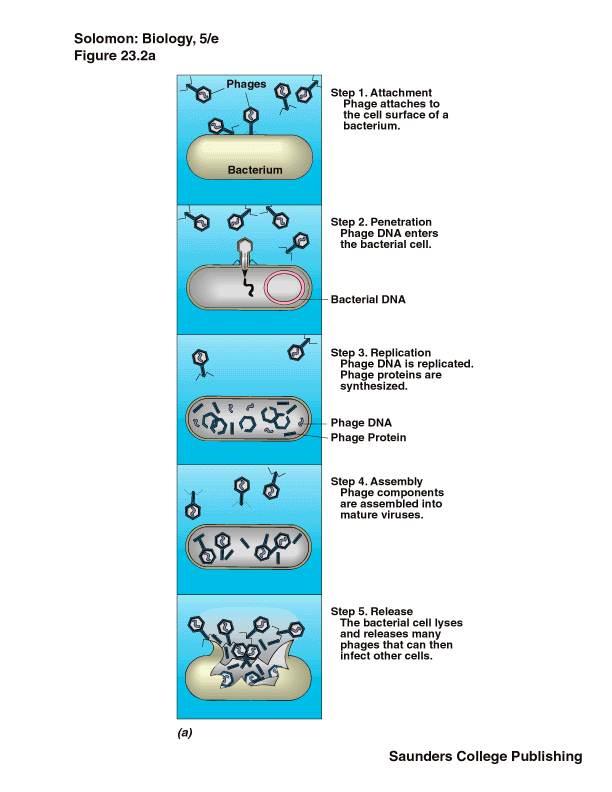
Simply put, viruses that kill their infected host cell are called virulent. The DNA in these type of viruses reproduces through the lytic cycle. When these viruses reproduce, they break open, or lyse, their host cells, resulting in the destruction of the host.


The whole cycle can be complete in 20 - 30 minutes depending on a variety of factors such as temperature. Phage reproduction is much faster than typical bacterial reproduction, so entire colonies can be destroyed very quickly.


Temperate Viruses and the Lysogenic Cycle


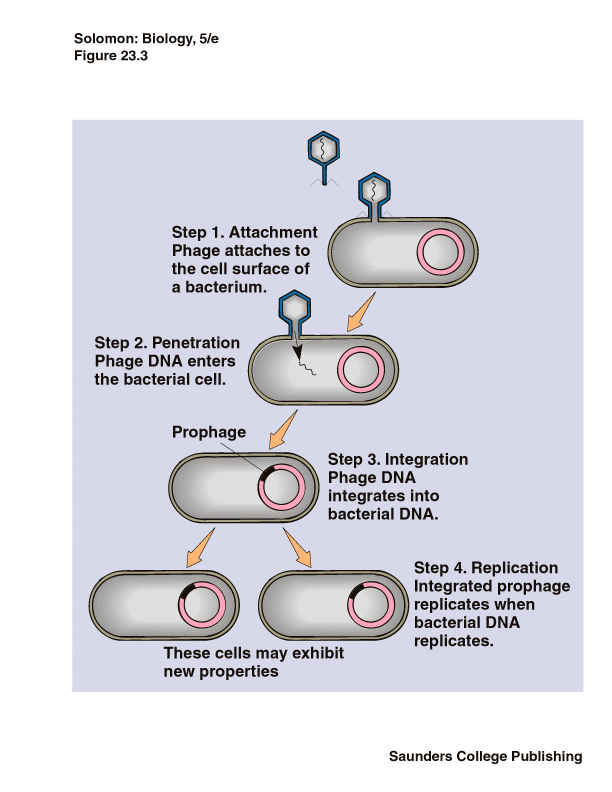
Temperate viruses are those that reproduce without killing their host cell. Typically they reproduce in two ways: through the lytic cycle and the lysogenic cycle. In the lysogenic cycle, the phage's DNA recombines with the bacterial chromosome. Once it has inserted itself, it is known as a prophage. A host cell that carries a prophage has the potential to lyse, thus it is called a lysogenic cell.


T4 phage infecting an E. coli bacterium. Image courtesy of Dr. K. Sathasivan. Used with permission.
Read more / Selengkapnya...

Virus Replication

Replication


A single virus particle (virion) is in and of itself essentially inert. It lacks needed components that cells have to reproduce. Viruses are intracellular obligate parasites which means that they cannot reproduce or express their genes without the help of a living cell. Once a virus has "infected" a cell, it will "marshal" the cell's ribosomes, enzymes and much of the cellular machinery to reproduce. Unlike what we have seen in mitosis and meiosis, viral reproduction produces many, many progeny, that when complete, leave the host cell to infect other cells in the organism.


Bacteriophage binding to the cell wall of a bacterium.
Copyright Dr. Gary Kaiser. Used with permission.

Bacteriophage injecting its genetic material into the bacterium.

Copyright Dr. Gary Kaiser. Used with permission.

The bacteriophage genome replicates

Copyright Dr. Gary Kaiser. Used with permission.
...

Self-Assembly


Interestingly enough, once the viral progeny components are produced by the cellular machinery, the assembly of the viral genome and the viral capsids is a non-enzymatic process. It is usually spontaneous.
The bacteriophage components and enzymes continue to be produced
Copyright Dr. Gary Kaiser. Used with permission

The components of the bacteriophage assemble.

Copyright Dr. Gary Kaiser. Used with permission

Bacteriophage enzyme breaks down the bacterial cell wall causing the bacterium to split open.
Copyright Dr. Gary Kaiser. Used with permission
Specificity
Ah, the beauties of structure and function! Viruses typically can only infect a limited number of hosts (also known as host range). The "lock and key" mechanism is the most common explanation for this range. Certain proteins on the virus particle must fit certain receptor sites on the particular host's cell surface.
Read more / Selengkapnya...

Comments

Script Search

My_friendster

Yahoo Messenger

Spider View

Snap Shots

Get Free Shots from Snap.com

Friends