About Me

Foto saya
juzt a simple man with his three angels....

Jam neh....

Star Rating

Tampilkan postingan dengan label healthy. Tampilkan semua postingan

Rabu, 10 Juni 2009

How Proteins Find The Right DNA Sequences

Illustration of how proteins find the right DNA sequences. (Credit: Image courtesy of Uppsala University)


Researchers at Uppsala University and Harvard University have collaboratively developed a new theoretical model to explain how proteins can rapidly find specific DNA sequences, even though there are many obstacles in the way on the chromosomes.


...

In living cells, DNA-binding proteins regulate the activity of various genes so that different cells carry out the right tasks at the right time. For this to work, the DNA-binding proteins need to find the right DNA site sufficiently quickly. The research team behind the new study has previously succeeded in determining that it takes only a few minutes for an individual protein molecule to look through the millions of nearly identical binding alternatives and find the right place to bind. This is nevertheless slower than what is predicted by the established theoretical model for how DNA-binding proteins find their way to the proper place by alternating between diffusing in the cell cytoplasm and along DNA strands.
"By also taking into consideration the fact that there are many obstacles in the way when proteins are to diffuse along DNA strands, we can now calculate more exactly how long it takes them to find their way," says Johan Elf, associate professor of molecular biotechnology at the Center for Bioinformatics.
Besides offering a more precise prediction regarding the time needed to find the right site on DNA, the new theoretical model explains why there is an optimal total concentration of DNA-binding proteins. If there were more, it would simply be impossible for them to find a binding place in a reasonable time, since the proteins would be in each other's way. If there were fewer it would go slower as well, since not enough proteins would be searching. Finally, the new model provides an explanation why so many DNA-binding proteins also bind auxiliary binding sites close to the regulatory site, thus forming DNA loops. It turns out that this can shorten the time to find the right sites.
"This more detailed understanding of gene regulation is important, since it can ultimately provide a better understanding of diseases that occur as a result of problems in the control functions of cells, such as in cancer" says Johan Elf.
The researchers behind the study are Gene-Wei Li, Otto G. Berg, and Johan Elf. The findings are being published March 16 in the scientific journal Nature Physics.
Read more / Selengkapnya...

New Antibiotics Could Come From A DNA Binding Compound That Kills Bacteria In 2 Minutes

A synthetic DNA binding compound has proved surprisingly effective at binding to the DNA of bacteria and killing all the bacteria it touched within two minutes. The DNA binding properties of the compound were first discovered in the Department of Chemistry at the University of Warwick by Professor Mike Hannon and Professor Alison Rodger (Professor Mike Hannon is now at the University of Birmingham). However the strength of its antibiotic powers have now made it a compound of high interest for University of Warwick researchers working on the development of novel antibiotics.

...

Dr Adair Richards from the University of Warwick said: "This research will assist the design of new compounds that can attack bacteria in a highly effective way which gets around the methods bacteria have developed to resist our current antibacterial drugs. As this antibiotic compound operates by targeting DNA, it should avoid all current resistance mechanisms of multi-resistant bacteria such as MRSA."
The compound [Fe2L3]4+ is an iron triple helicate with three organic strands wrapped around two iron centres to give a helix which looks cylindrical in shape and neatly fits within the major groove of a DNA helix. It is about the same size as the parts of a protein that recognise and bind with particular sequences of DNA. The high positive charge of the compound enhances its ability to bind to DNA which is negatively charged.
When the iron-helicate binds to the major groove of DNA it coils the DNA so that it is no longer available to bind to anything else and is not able to drive biological or chemical processes. Initially the researchers focused on the application of this useful property for targeting the DNA of cancer cells as it could bind to, coil up and shut down the cancer cell's DNA either killing the cell or stopping it replicate. However the team quickly realised that it might also be a very clever way of targeting drug-resistant bacteria.
New research at the University of Warwick, led by Dr Adair Richards and Dr Albert Bolhuis, has now found that the [Fe2L3]4+ does indeed have a powerful effect on bacteria. When introduced to two test bacteria Bacillus subtilis and E. coli they found that it quickly bound to the bacteria's DNA and killed virtually every cell within two minutes of being introduced - though the concentration required for this is high.
Professor Alison Rodger, Professor of Biophysical Chemistry at the University of Warwick, said: "We were surprised at how quickly this compound killed bacteria and these results make this compound a key lead compound for researchers working on the development of novel antibiotics to target drug resistant bacteria."
The researchers will next try and understand how and why the compound can cross the bacteria cell wall and membranes. They plan to test a wide range of compounds to look for relatives of the iron helicate that have the same mechanism for action in collaboration with researchers around the world.


Read more / Selengkapnya...

Stem Cells Cultured On Contact Lens Restore Sight In Patients With Blinding Corneal Disease

In a world-first breakthrough, University of New South Wales (UNSW) medical researchers have used stem cells cultured on a simple contact lens to restore sight to sufferers of blinding corneal disease.

...

Sight was significantly improved within weeks of the procedure, which is simple, inexpensive and requires a minimal hospital stay.
The research team from UNSW’s School of Medical Sciences harvested stem cells from patients’ own eyes to rehabilitate the damaged cornea. The stem cells were cultured on a common therapeutic contact lens which was then placed onto the damaged cornea for 10 days, during which the cells were able to re-colonise the damaged eye surface.
While the novel procedure was used to rehabilitate damaged corneas, the researchers say it offers hope to people with a range of blinding eye conditions and could have applications in other organs.
A paper detailing the breakthrough appears in the journal Transplantation this week.
The trial was conducted on three patients; two with extensive corneal damage resulting from multiple surgeries to remove ocular melanomas, and one with the genetic eye condition aniridia. Other causes of cornea damage can include chemical or thermal burns, bacterial infection and chemotherapy.
“The procedure is totally simple and cheap,” said lead author of the study, UNSW’s Dr Nick Di Girolamo. “Unlike other techniques, it requires no foreign human or animal products, only the patient’s own serum, and is completely non-invasive.
The surgeon who carried out the procedure and managed the patients was UNSW senior lecturer, Dr Stephanie Watson.
"The operation is relatively non-invasive. The patient merely comes into the hospital for a couple of hours to have their eye prepared and the lens put in place, and then they're able to go home," she said.
“There’s no suturing, there is no major operation: all that’s involved is harvesting a minute amount – less than a millimeter – of tissue from the ocular surface,” said Dr Di Girolamo.
“If you’re going to be treating these sorts of diseases in third world countries all you need is the surgeon and a lab for cell culture. You don’t need any fancy equipment.”
Because the procedure uses the patient’s own stem cells harvested from their eye, it is ideal for sufferers of unilateral eye disease. However, it also works in patients who have had both eyes damaged, Dr Di Girolamo said.
“One of our patients had aniridia, a congenital condition affecting both eyes. In that case, instead of taking the stem cells from the other cornea, we took them from another part of the eye altogether – the conjunctiva – which also harbours stem cells.
“The stem cells were able to change from the conjunctival phenotype to a corneal phenotype after we put them onto the cornea. That’s the beauty of stem cells,” Dr Di Girolamo said.
The therapeutic contact lens used in the trial was of a type commonly used worldwide after ocular surface surgery. However, of the several brands on the market, only one was suitable for growing the stem cells.
“We don’t know why. It’s probably to do with the components the manufacturers have used in that particular lens,” Dr Di Girolamo said.
The researchers are hopeful the technique can be adapted for use in other parts of the eye, such as the retina, and even in other organs. “If we can do this procedure in the eye, I don’t see why it wouldn’t work in other major organs such as the skin, which behaves in a very similar way to the cornea,” Dr Di Girolamo said.


Read more / Selengkapnya...

Minggu, 26 April 2009

JELLY JAMBU BIJI MERAH DAN JELLY DURIAN MINUMAN SEHAT TANPA PENGAWET

Durian dan jambu biji merah merupakan komoditas yang banyak dijumpai di beberapa daerah di Sumatera Barat. Durian banyak dikembangkan pada hampir semua Kabupaten dan Kota di Sumatera Barat, mencakup luasan 1.668,75 hektar yang mampu memproduksi sekitar 36.801,90 ton. Sementara itu, produksi jambu biji merah sering dijumpai dalam jumlah yang cukup banyak di Kota Padang.
Pengolahan berbagai komoditas tanaman buah-buahan menjadi berbagai produk olahan, merupakan salah satu cara yang umum dilakukan untuk mengantisipasi limpahan produksi yang tidak laku terjual atau afkiran yang masih baik, yang seringkali terjadi pada saat musim panen raya. Pengolahan produk pertanian salah satunya juga bertujuan untuk meningkatkan nilai tambah maupun nilai jual. Salah satu bentuk olahan yang saat ini dapat dikembangkan adalah pembuatan minuman jelly.

...

Minuman jelly dibuat dengan cara mengekstrak buah dan menambahkan tepung jelly sebagai pengental, gula tebu sebagai pemanis, garam dan asam sitrat. Jelly buah-buahan mengandung nutrisi yang berguna bagi kesehatan. Jelly ini dapat dikatakan sebagai minuman fungsional, yaitu minuman yang berkhasiat menjaga kesehatan.
BPTP Sumatera Barat menangkap peluang pengembangan usaha tersebut dan telah mengkaji teknologi inovasi pengolahan jambu biji merah dan durian menjadi minuman jelly. Teknologi pembuatannya tidaklah sulit, hanya dengan peralatan sederhana dan biaya murah. Produksinya dapat dilakukan dalam skala rumah tangga, baik secara perorangan ataupun berkelompok. Sesuai dengan tuntutan pasar saat ini, maka produk jelly yang dihasilkan tanpa menggunakan bahan pengawet dan pewarna buatan, menarik untuk disuguhkan.

Pembuatan Jelly Jambu Biji Merah dan Jelly Durian
Bahan-bahan yang diperlukan untuk pembuatan jelly jambu biji merah adalah buah jambu biji merah, tepung jelly, gula pasir, garam dan asam sitrat. Peralatan yang digunakan adalah baskom, pisau, blender, panci, kompor, cup plastik, dan lemari pendingin untuk mempercepat proses pengentalan.
Prosedur pembuatan jelly jambu biji merah diawali dengan mencuci, mengupas dan menghancurkannya dengan blender sampai menjadi bubur. Bubur dimasukkan ke dalam panci besar, lalu ditambahkan air sebanyak 2,5 liter untuk setiap 0,5 kg jambu biji merah, kemudian disaring. Hasil saringan atau filtrat ditambah gula pasir, tepung jelly, garam dan asam sitrat. Penambahan bahan-bahan tersebut disesuaikan dengan selera. Selanjutnya, campuran filtrat jambu biji merah tersebut dipanaskan sampai mendidih sambil terus diaduk-aduk.
Terakhir, jelly jambu biji merah dikemas dalam cup plastik dan didinginkan dalam lemari pendingin. Setelah mengental, jelly jambu biji merah dapat langsung diminum atau dipasarkan dan tahan disimpan dalam lemari pendingin selama 4 hari, jika disimpan di ruang terbuka hanya tahan 2 hari. Agar tahan lebih lama lagi, sebelum dimasukkan ke dalam lemari pendingin, terlebih dahulu dipasteurisasi dalam air panas dengan suhu 80oC selama 5 menit.
Read more / Selengkapnya...

Rabu, 22 April 2009

Minimizing The Spread Of Deadly Hendra Virus

This artificially coloured electron micrograph of Hendra virus is from the first identified case in Brisbane in 1994. (Credit: CSIRO)
CSIRO Livestock Industries' scientists working at the Australian Animal Health Laboratory (AAHL), in Geelong Victoria, have made a major breakthrough in better understanding how Hendra spreads from infected horses to other horses and humans.


Funded by the Australian Biosecurity CRC for Emerging Infectious Diseases, Dr Deb Middleton and her team at AAHL have defined the period following the first signs of disease when horses are most likely to shed Hendra virus and therefore infect other horses and people.
First identified in Brisbane in 1994, Hendra virus, which spreads from flying foxes, has regularly infected horses in Australia. Of the 11 equine outbreaks, four have led to human infection, with three of the six known human cases being fatal, the most recent of these in August 2008.
Dr Deb Middleton and her team at AAHL have defined the period following the first signs of disease when horses are most likely to shed Hendra virus and therefore infect other horses and people.


...

Dr Middleton says limited information in the past, on when the disease can transmit, has made it difficult to manage infected horses to stop Hendra spreading further to people and other susceptible horses.
"Our research has also determined the best biological samples required for rapid diagnosis of the virus in horses and identified the important relationship between the period of highest transmission risk and the time with which the disease can easily be detected," Dr Middleton says.
As a result of these findings, veterinarians and horse owners are likely to consider the possibility of Hendra virus infection sooner when dealing with sick horses. This will mean appropriate management strategies can be put in place immediately, reducing the risk of spread while testing is being carried out.
"Unlike in horse flu, where apparently healthy horses can transmit the virus, horses in the early stages of Hendra infection generally appear to be at lower risk compared to animals with more advanced signs of illness."
These research findings will be used to update the guidelines that horse owners and vets use to handle potential Hendra virus infections.
Dr Middleton says her research also indicates there is an opportunity to diagnose Hendra virus in horses early, prior to advanced clinical signs and the highest risk of transmission.
"Developing a sensitive and specific stall-side test, which vets could use out in the field to diagnose the disease, has become even more important. However there are still key challenges to developing this type of advanced technology."
Although it is still not known how Hendra spreads from flying foxes to horses, Dr Middleton says the key to preventing human exposure and the exposure of additional horses is first understanding the disease in horses and secondly controlling the viral spread from diseased horses.
All research for the project was undertaken within AAHL's high-biocontainment facility.
Read more / Selengkapnya...

Selasa, 14 April 2009

Medicine From Milk: Gene Therapy Could Transform Goats Into Pharmaceutical Factories

Researchers have used gene therapy to reduce the time it takes to breed goats capable of producing therapeutic proteins in their milk, such as insulin or those that fight cancer. (Credit: iStockphoto)

University of Pennsylvania researchers have used gene therapy to reduce the time it takes to breed large animals capable of producing therapeutic proteins in their milk, such as insulin or those that fight cancer. This represents a significant milestone in drug development, as current methods involve cloning, which takes more time and generally costs more.


...

"Having an easier way to harness nature's power to produce large quantities of specific proteins in milk could increase the availability of drugs for people who could otherwise not afford these treatments," said Ina Dobrinski, one of the researchers on the study.
The study also is significant because it may also be a new way to eliminate diseases in future generations of animals, such as those used for livestock. Here's why: To get the goats to produce specific proteins, the researchers used radiation to kill a portion of a male goat's germ cells (the cells that produce sperm). Then they used a modified adeno-associated virus (a well studied and tolerated gene therapy vector) to insert a gene in the remaining cells. Once the new gene took hold in the germ cells, a predictable number of offspring carried the gene necessary to produce the desired protein in their milk.
The advance is immediately valuable for pharmaceutical development and biology research, but a similar approach could be used to bolster the food supply by eliminating genetic disorders in animals over several generations. It is also possible that once perfected, this technique could eliminate disease genes in humans over several generations, assuming ethical concerns can be resolved adequately.
This study is published in the February 2008 print edition of The FASEB Journal.
"For thousands of years, people have domesticated cows and goats to make milk, butter and cheese. And for thousands of years dairy products have been used as folk remedies for practically every human illness. Most have been completely ineffective." said Gerald Weissmann, MD, editor-in-chief of The FASEB Journal. "So it is reassuring that modern science would find a way to use the milk we drink to yield of drugs that actually work."
Read more / Selengkapnya...

Sabtu, 11 April 2009

wetz...Tidur Telentang Bisa Menyebabkan Kematian...

Teman-teman ini ada hasil penelitian terbaru dari Jepang masalah kesehatan yang dikutip dari hidupsehat.com, semoga bermanfaat bagi kita semua.

Menurut penelitian yg di lakukan oleh para Profesor ahli dari jepangselama hampir 20 tahun akhirnya mereka mengumumkan keputusan yg sangatmengejutkan kita semua tentang cara kita tidur selama ini.Ternyata tidur telentang sangat tidak dianjurkan sama sekali oleh para peneliti dari jepang.


...

Berikut kutipan dari Prof. Dr. Yosihiro :
"Kalo tidur jangan sekali kali dengan posisi TELENTANG!!…Karena tidur TELENTANG itu bisa mengganggu kesehatan anda.
Beberapa survei telah dilakukan dan menghasilkan bukti yg akurat."Orang2 yg tidur TELENTANG akan mengalami gejala2 sbb:
1. Susah bernafas
2. Tersedak
3. Pencernaan terganggu
4. Yg paling fatal,dapat menyebabkan KEMATIAN!!…

Oleh karena itu, disarankan agar anda menghindari tidur TELENTANG,Sebab jangankan tidur TELEN TANG, TELEN BAUT saja susahnya setengah modar……
Jadi disarankan cukup tidur TELEN LIUR aja ya..
hehehe.. .

Read more / Selengkapnya...

Terapi Hormon Memperbaiki Seks dan Tidur Wanita Menopause

Wanita menopause yang menjalani terapi penggantian hormon dapat meningkatkan fungsi seksual, mengurangi insomnia dan mengurangi gejolak panas, menurut penelitian yang diliris hari ini.
Riset yang dilakukan terhadap 2.130 wanita menopause dari Australia, Selandia Baru dan Inggris itu menemukan bahwa penggunaan terapi hormon kombinasi oestrogen dan progestogen dapat meningkatkan beberapa indikator kualitas hidup.
Hasil ini muncul di tengah debat tentang risiko dan manfaat terapi hormon bagi wanita menopause yang juga dikaitkan dengan risiko lebih tinggi akan serangan stroke, pembekuan darah dan kanker payudara.
Sebagian besar wanita yang diteliti berusia pertengahan 60-an, yang telah menjalani menopause rata-rata 13 tahun, dan sebagian besar mereka tidak memiliki gejala perubahan hidup.


...

"Hasil penelitian kami menunjukkan gejolak panas, keringat di malam hari, susah tidur dan rasa sakit lainnya sangat kecil bagi wanita yang melakukan terapi hormon di kelompok usia ini," ujar Professor Alastair MacLennan, kepala studi independen Australia.
"Seksualitas juga meningkat," tambahnya.Penelitian itu menemukan bahwa persentase wanita yang menjalani terapi hormon mengalami gejolak panas menurun dari 30 persen menjadi 9 persen selama setahun, sementara mereka yang menderita insomnia menurun dari 45 persen menjadi 35 persen.
Sementara 63 persen wanita yang menjalani terapi mengatakan mereka mengalami sakit tulang sendi dan otot di awal terapi, kemudian turun 57 persen setelah 12 bulan.
MacLennan mengatakan bahkan bagi wanita yang tidak mempunyai gejala panas dan baik-baik saja saat menopause, ada "peningkatan meskipun kecil dalam kualitas hidup dan dalam masalah tidur, seksualitas dan penyakit gabungan.
"Hasil ini dipublikasikan di situs Jurnal Kedokteran Inggris berasal dari percobaan terapi hormon terlama dan terbesar di dunia-- Women's International Study of long Duration Oestrogen after Menopause (WISDOM).MacLennan, yang menjadi kepala kebidanan dan kandungan di Universitas Adelaide mengatakan studi WISDOM akan membantu mengurangi risiko pengobatan.
"Untuk sebagian besar wanita dengan gejala menopause signifikan manfaat terapi hormon mengalahkan risikonya," ujarnya.Kepala cabang WISDOM Selandia Baru, Beverley Lawton, mengatakan kualitas dari manfaat terapi hormon kemungkinan lebih besar pada wanita dengan gejala berat mendekati menopause.
"Riset baru menyatakan bahwa terapi homon yang dilakukan mendekati menopause menghindarkan risiko serangan jantung yang terlihat ketika terapi hormon dilakukan beberapa tahun setelah menopause," ujarnya.
Read more / Selengkapnya...

Mauw tauw rahasia kentut..???^_^


Buang angin, kentut, atau yang dalam istilah ilmiahnya disebutflatulence, flatulency, flatus, adalah ciptaan Allah, yang sudah pasti bukanlah peristiwa biasa. Anda dapat membuktikannya dengan mencari tulisan ilmiah seputar kentut di mesin pencari pustaka ilmiah di internet, misalnya di scholar.google. com dengan mengetikkan kata kunci flatulence intestine. Yang akan Anda dapatkan adalah tidak kurang dari 4800 rujukan ilmiah yang membahas atau mengandung rujukan tentangkentut dari tahun 2000 hingga sekarang!
Tidak sampai di situ saja. Rujukan ilmiah tersebut diterbitkan olehberagam jurnal ilmiah dari berbagai disiplin, dari ilmu gizi, kedokteran, hingga kesehatan dan pengobatan. Sudah pasti ini bermakna pula peneliti dan para ilmuwan yang berkecimpung di bidang penelitian kentut juga berasal dari beragam disiplin ilmu.
...

Fisika di balik kentut
Keluarnya angin dari anus itu sendiri juga merupakan peristiwa yang memperlihatkan kebesaran Sang Pencipta. Di dalam saluran pencernaan makanan, terutama di dalam usus, terdapat berbagai zat berwujud padat, cair, gas, serta dengan tingkat kepadatan dan keenceran beragam. Hebatnya, angin kentut yang berbentuk gas bisa mengalir ke arah bawah, dan menerobos cairan dan padatan di dalam usus, untuk kemudian keluarmeninggalkan dubur.
Ini bukan peristiwa yang tidak aneh. Mengapa? Anda bisa mencoba mencampur zat padat, zat cair dan gas di dalam tabung atau gelas yang memiliki katup pengeluaran di bagian dasarnya. Lalu Anda berikan tekanan pada campuran tersebut, bisakah Anda memastikan bahwa gas tersebut bergerak ke arah bawah dan bahwa yang keluar dari katup pengeluaran tersebut hanya gas saja?
Biasanya gas atau gelembung udara bergerak menuju ke atas karena lebih ringan, dan sulit mengeluarkan gas tanpa mencegah keluarnya cairan atau padatannya melalui katup tersebut. Tapi peristiwa kentut terjadi melalui cara di luar kebiasaan itu berkat sempurnanya ciptaan Allah pada otot cincin yang membuka dan menutup lubang anus itu.
Otot lingkar pada dubur ini mampu merasakan keberadaan gas kentut dan mengatur pengeluarannya sedemikian rupa sehingga hanya gas saja, dan bukan padatan dan cairan, yang keluar dari anus. Bayangkan seandainya otot ini tidak mampu memilah dan mencegah keluarnya cairan dan padatan dari usus besar kita di saat kita buang angin di tempat terbuka.
Sangat diragukan jika ada alat buatan manusia yang mampu melakukan kerja seperti lubang anus yang luar biasa itu. Otot-otot dan jaringan terkait di seputar anus adalah organ ciptaan Allah yang Mahahebat, yang mampu melakukan kerja pelepasan gas kentut sekitar 10 kali per hari dengan sempurna, selama puluhan tahun usia manusia.
Kimia gas kentut
Di dalam usus besar, sekitar 70% gas berasal dari udara yang tertelan melalui mulut kita. Ketika makan, orang pada saat yang sama menelan ke dalam perutnya sekitar 2-3 cc udara. Misalnya, jika kita makan apel, udara tambahan yang ikut tertelan ke dalam tubuh kita adalah sekitar 20 cc. Begitu pula dengan minum. Kurang lebih 17 cc udara memasuki saluran pencernaan makanan saat seseorang meminum 10 cc air.
Gas selebihnya yang terdapat pada usus adalah gas asli buatan “dalam negeri”, alias muncul dari dalam usus itu sendiri dan bukan dari luar tubuh. Gas ini dihasilkan melalui aktifitas penguraian oleh mikroba di dalam saluran pencernaan kita.
Bagaimana gas-gas itu terbentuk? Tidak semua makanan yang kita telan dicerna sempurna dan diserap keseluruhannya di dalam usus halus. Sebagian makanan berserat atau zat tepung yang tak tercerna sempurna ini, misalnya kacang-kacangan, kemudian dirombak atau diuraikan oleh mikroba yang menghuni saluran pencernaan kita. Penguraian ini di antaranya menghasilkan zat-zat berwujud gas seperti metana dan hidrogen sulfida, serta gas-gas yang mengandung unsur belerang lainnya.
Gas kentut adalah campuran beragam gas. Kentut sebagian besarnya terdiri atas gas oksigen, nitrogen, karbon dioksida dan metana yang kesemuanya ini bukan penyebab bau tidak sedap. Yang memunculkan aroma tidak sedap pada kentut adalah gas-gas yang mengandung belerang. Di antaranya adalah hidrogen sulfida (bau telur busuk), methanethiol (bau sayur membusuk). Namun ada pula dimetil sulfida yang memiliki bau manis.
Kreatif karena kentut
Ternyata kentut memiliki nilai komersial. Sebut saja Josef Pujol,warga Prancis kelahiran Marseilles tahun 1857. Ia memiliki kelebihan mampu dengan sengaja mengendalikan otot-otot perutnya. Dengannya, ia dapat dengan mudah menyedot 2 liter udara ke dalam usus besarnya melalui anus, dan meniupkan kembali ke luar anus. Dengan kata lain, ia mampu membuat “kentut buatan”.
Berbekal bakat ini, ia memasuki dunia pentas hiburan. Sebelum pentas, ia “mencuci usus besarnya” agar tidak menimbulkan bau tak sedap. Suara buang anginnya hanya memiliki 4 tangga nada: do, mi, sol dan do lagi.
Pentas profesionalnya berawal di tahun1887. Karirnya mulai menanjak ketika ia naik panggung di gedung musik Moulin Rouge di Paris pada tahun1892. Dalam pentasnya, terkadang ia memasang selang pada anusnya yang kemudian disambungkan ke berbagai alat musik tiup untuk bermain musik.
Selain sangat terkenal, ia juga mendapatkan penghasilan 20.000 frank per minggu, dua setengah kali lebih banyak dibandingkan artis kondang kala itu, Sarah Bernhardt. Ketenarannya ini bahkan sempat mendorong Raja Belgia datang diam-diam untuk melihat Josef Pujol.
Penyaring kentut
Kini telah tersedia produk di pasaran yang berfungsi menghilangkan bau kentut yang tidak sedap. FLAT-D adalah salah satu nama produk berbentuk kain persegi panjang, yang mudah dilipat dan dibawa. Kain ini digunakan dengan cara menghamparkan di atas kursi kerja, atau kursi kantor. Selain dapat dicuci dan digunakan ulang, kain ini mengandung karbon teraktifasi.
Ketika seseorang buang angin dalam keadaan duduk di atas kursi kerja yang tertutup kain FLAT-D, kain ajaib ini menyerap aroma tidak sedap kentut tersebut. Penyaring kentut ini diproduksi pula dalam bentuk pembalut yang dapat direkatkan pada celana dalam, sehingga lebih praktis.
Selain FLAT-D, ada pula produk serupa bernama Under-Ease yangdikeluarkan oleh perusahaan Under-Tec Corp. Pakaian dalam yang sudah mendapatkan hak paten ini adalah hasil kerja keras penelitian pasangan suami istri Buck and Arlene Weimer. Produk mereka sempat menjadi buah bibir di media massa AS di awal tahun 2000-an.
Demikianlah, tulisan singkat ini tidak mungkin dapat menampung seluruh hasil-hasil temuan ilmiah dan inovasi teknologi seputar kentut, gas yang seringkali dicemooh orang. Namun, sebagai salah satu ciptaan Allah, ternyata kentut membuktikan bahwa tiada sesuatu yang Allah ciptakan, melainkan menjadi bukti keagungan dan keluasan ilmu Allah, Pencipta tanpa tara. Dialah yang menciptakan segala sesuatu dengan tujuan yang benar, sebagaimana firman-Nya, yang artinya:
(yaitu) orang-orang yang mengingat ALLAH sambil berdiri atau duduk atau dalam keadaan berbaring dan mereka memikirkan tentang penCIPTAAN langit dan bumi (seraya berkata): Ya Rabb kami, tiadalah Engkau menciptakan ini dengan SIA-SIA Maha Suci Engkau, maka peliharalah kami dari siksa neraka. (QS. Ali `Imran, 3:191)
(Penulis: Abdul Halim – Februari 2008)
Sumber: www.mitrafm. com
Read more / Selengkapnya...

Bahaya Radiasi Ponsel..!!!!

Tengoklah iklan tarif telepon seluler dari berbagai perusahaan. Tawaran mereka benar-benar menggiurkan: gratis bicara sepanjang hari, bebas menelepon semaumu atau ngobrol sampai dower, dan banyak iming-iming lainnya. Gara-gara tarif murah, orang dengan mudah berhalo-halo tanpa batas. Pulsa mungkin saja "aman", namun kesehatan bisa terancam.
Pembantu rumah tangga atau buruh bangunan pun mengantongi telepon. Di Indonesia, menurut Budi Putra, pengamat dan pengelola blog teknologi komunikasi, pengguna telepon seluler kini mencapai 115 juta orang, sekitar separuh dari jumlah penduduk Indonesia. Menurut data Organisasi Kesehatan Dunia (WHO), pengguna handphone di seluruh jagat mencapai tiga miliar orang. Dua kali lipat dibandingkan data 2005.Di balik semua kemudahan berkomunikasi, telepon genggam memunculkan kekhawatiran, terutama bagi kesehatan. Pemicunya, penelitian Vini Gautam Khurana, ahli bedah saraf dari Universitas Nasional Australia, Canberra, yang dipublikasikan pada akhir Maret lalu. Selama 15 bulan, Khurana menelaah lebih dari 100 penelitian yang telah dilakukan berbagai lembaga, tentang keselamatan penggunaan telepon seluler. Hasil penelitian itulah yang menimbulkan gelombang reaksi besar hingga sekarang, karena Khurana menyatakan penggunaan telepon seluler akan memicu epidemi tumor otak, yang akan membunuh lebih banyak orang ketimbang rokok. Menurut riset profesor peraih 14 penghargaan medis ini, penggunaan telepon seluler--langsung dari handset--lebih dari 10 tahun akan menggandakan risiko terkena kanker otak.

...

Tidak hanya Khurana yang punya perhatian besar terhadap dampak buruk penggunaan telepon seluler, lembaga penelitian bergengsi lain juga demikian. Pada Juni lalu Mobile Telecommunications and Health Research di Inggris, bekerja sama dengan Imperial College, London, mengadakan penelitian besar-besaran tentang apakah telepon genggam bisa memicu gejala kanker otak, alzheimer, dan parkinson. Penelitian yang didanai pemerintah Inggris dan sejumlah perusahaan seluler ini akan "membuntuti" 90 ribu orang responden selama setahun. Lalu mengevaluasi dampak kesehatannya. Menjawab kekhawatiran dunia akan bahaya telepon genggam, Organisasi Kesehatan Dunia juga telah meluncurkan Health Evidence Network. Ini merupakan layanan informasi Organisasi Kesehatan Dunia Kantor Regional Eropa, sebagai referensi bagi pengambil keputusan di bidang medis. Ternyata, menurut organisasi kesehatan di bawah Perserikatan Bangsa-Bangsa ini, bukti bahwa radiasi telepon seluler dapat memicu tumor otak, tumor pada sel saraf pendengaran, tumor kelenjar saliva, leukemia dan limfoma, masih "lemah dan tak bisa disimpulkan". Alasannya, orang hanya memakai telepon dalam waktu terbatas--bukan sepanjang hari secara terus-menerus. Meski begitu, lembar fakta Organisasi Kesehatan Dunia menyebutkan, tidak ada bukti bukan berarti tidak ada efek. Harus ada penelitian lanjutan yang lebih spesifik untuk tiap-tiap kasus. Untuk itu, pada Oktober 2009, organisasi ini akan mengeluarkan rekomendasi resmi tentang aturan menggunakan telepon genggam, tentu saja berdasar penelitian yang lebih kredibel. Khurana sendiri menyarankan untuk membuat penelitian dampak penggunaan telepon seluler dalam jangka 10-15 tahun, agar menghasilkan "kajian ilmiah yang solid".Belum adanya kepastian tentang tingkat bahaya penggunaan telepon seluler itulah yang menjadi masalah. Para dokter di Indonesia menyatakan, meski pemakaian telepon seluler meningkat belakangan ini, belum ada penelitian di Tanah Air tentang bahayanya bagi kesehatan. Menurut Silvia F. Lumempouw, dari berbagai kasus penyakit saraf yang ia tangani--termasuk alzheimer dan neuroma akustik--belum pernah ada yang terkait langsung dengan penggunaan telepon genggam. Spesialis saraf dari Rumah Sakit Cipto Mangunkusumo dan Rumah Sakit Dharma Nugraha ini menyatakan, radiasi dari seluler sebetulnya tak terlalu berbahaya jika dibandingkan dengan sumber radiasi lain seperti rontgen atau CT-scan. Para pekerja medis yang setiap hari berurusan dengan radiasi pun aman, apalagi "cuma" telepon. Silvia juga mengingatkan, sebetulnya kita juga dikelilingi radiasi dari televisi, radio, komputer, dan berbagai peranti lain. Karena itu, ia menyarankan, kita juga wajib mewaspadai gejala akibat penggunaan handphone yang berlebihan. "Teknologi kan diciptakan untuk memudahkan, bukan untuk membuat sakit," katanya.Pengurus Perhimpunan Dokter Spesialis Saraf Indonesia (Perdossi) ini membandingkan telepon genggam dengan obat. Jika sebelum dipasarkan, obat harus sukses melalui serangkaian proses (dicoba di hewan, lalu di manusia, kemudian di orang sakit), alat-alat teknologi pun seharusnya begitu. "Mesti ada aturan dari sisi kesehatan, sebelum produk itu dipasarkan," kata Silvia. Jangan hanya berorientasi pada kecanggihan tapi tak mementingkan sisi medis. Himawan W.H. juga menyatakan hal senada. Dokter spesialis telinga, hidung, dan tenggorokan di jaringan Rumah Sakit Mitra Internasional ini menyebut semua radiasi pada dasarnya berbahaya. Namun radiasi dari telepon genggam relatif kecil.Selain dari telepon genggam, potensi radiasi di sekitar kita yang patut diwaspadai adalah penggunaan microwave, telepon tanpa kabel, paparan sinar matahari langsung, dan penerbangan. Laporan United States Federal Aviation Administration menyatakan, mereka yang terbang secara rutin terekspos radiasi setara dengan 170 kali dipindai sinar X. Karena selalu mengarungi udara itulah, pramugari dan pilot lebih rentan terkena kanker. (Majalah Tempo)
Read more / Selengkapnya...

Wow...Kulit Semangka Bisa Jadi Obat...Keyen g tuh??!!


Hasil penelitian terbaru, seperti dikutip kantor berita Arab Saudi (SPA) Minggu (22/7), menyebutkan bahwa kulit semangka juga dapat menyembuhkan sedikitnya lima macam penyakit.
Penyakit-penyakit yang bisa disembuhkan oleh kulit semangka adalah darah tinggi kronis, radang ginjal, sulit buang air kecil, sulit buang air besar kronis dan penyakit dropsy (sakit gembur-gembur).


...

Hasil penelitian yang dilakukan Lembaga Medis Biologi yang disiarkan oleh Majalah Riset Medis Yordania itu juga memberikan jaminan bagi pasien dapat sembuh setelah melakukan pengobatan selama sebulan dengan teratur.
Untuk darah tinggi disarankan untuk mengeringkan kulit semangka lalu ditumbuk halus. Setiap hari diambil 20 gram dari kulit yang telah ditumbuk itu dan dimasak dengan air secukupnya. Pasien yang meminumnya secara teratur selama sebulan, penyakit darah tingginya bisa tersembuhkan secara total.Sedangkan empat penyakit lainnya disarankan untuk memotong kecil kulit semangka tersebut lalu dimasak sehingga menjadi adonan lalu disimpan di dalam botol kaca yang ditutup rapi.
Pasien penderita radang ginjal, sulit buang air kecil, sulit buang air besar kronis dan penyakit gembur-gembur, dianjurkan memakan adonan tersebut satu sendok makan sehari sebelum sarapan selama sebulan.“Apabila pasien mengikuti petunjuk tersebut dengan teratur paling sedikit selama sebulan penuh, maka penyakit-penyakit tersebut akan sembuh total dengan izin Allah,” demikian hasil penelitian tersebut.
Dengan adanya hasil penelitian terbaru tersebut, warga Arab yang dikenal memang doyan makan buah semangka, kemungkinan tidak akan membuang kulitnya ke sampah, tapi akan disimpan menjadi bahan obat.(*) @Antara
Read more / Selengkapnya...

Virus Kills Cancer Stem Cells


Breast Cancer Cell
National Cancer Institute

Who would have thought that a common virus could become a potent weapon in the fight against breast cancer. Researchers have discovered that the human reovirus, a virus that does not cause disease in humans, effectively destroys breast cancer cells and cancer stem cells. This is a key discovery as cancer stem cells are very difficult to kill.

...

Cancer researcher Dr. Patrick Lee explains, "Cancer stem cells are essentially mother cells. They continuously produce new cancer cells, aggressively forming tumours even when there are only a few of them. You can kill all the regular cancer cells in a tumour, but as long as there are cancer stem cells present, disease will recur.
"An added benefit that human reovirus brings to the battle against cancer is that it also stimulates the immune system to attack cancer cells. Because the human immune system also attacks the reovirus however, the researchers are now focusing on a method to rein in the immune system so that it will attack the cancer cells while leaving the reovirus unharmed.
Read more / Selengkapnya...

Selasa, 27 Januari 2009

How Safe is the Air Indoors?

What is in the air in your home, where you work, or in public buildings? There may be bioaerosols — airborne biological contaminants. Aerobiological health hazards affect everyone on a daily basis and include allergens, mold spores, bacteria, and viruses that cause infectious diseases. How can these hazards be controlled indoors?

Aspergillus fumigatus is a fungus whose spores are common inhalation pollutants that pose a health hazard. Photo: Centers for Disease Control and Prevention.

Aerobiological engineering is a field of study that combines elements of engineering and microbiology that focus on reducing the risk of airborne disease by controlling the aerobiology of our indoor environments. It offers some solutions to the hazards of bioaerosols:

  • Existing technologies can collectively control these bioaerosols if we retrofit old buildings or specifically design new buildings to control airborne microbes.
  • By re-engineering our buildings on city-wide scales, the population can be broadly protected and potentially immunized against epidemics.
  • Developing standards for indoor environments and educating the public are critical steps to transforming our disease-prone society.


...

Aerobiological health threats

Contagious diseases are the most dangerous and costly threats posed to building occupants today, including influenza, SARS, tuberculosis, pneumonia, and meningitis. Emerging pathogens such as avian flu and the resurgence of old diseases like plague, scarlet fever, whooping cough, and measles highlight the increasing vulnerability of populations to epidemic disease.
Evolving drug resistance, especially among hospital-acquired infections, complicates treatment of microbial agents, and physicians see their once abundant arsenal of antibiotics shrinking faster than new miracle drugs can be developed. Vaccines, once thought to be magic bullets, seem insufficient by themselves to combat airborne pathogens that can be transmitted freely in our unprotected buildings and have the potential to spread globally and cause pandemics.
Relatively mundane health threats like mold, dander, and allergens burden homes, schools, and offices, while the threat of bioterrorism leaves our buildings vulnerable to manmade epidemics that could decimate cities. Such formidable challenges can be placed into a manageable context if we recognize that protecting our buildings against the most common microbes simultaneously protects against the most dangerous threats as well.
Air- and surface-cleaning technologies

The technologies needed to create healthy buildings already exist, but they are not implemented widely enough to interdict epidemics. Optimized combinations of filtration and ultraviolet germicidal irradiation (UVGI) can be used to remove airborne microbes with high efficiencies. Combining and optimizing these technologies is the most cost effective means of disinfecting indoor air.
  • Filtration removes airborne particles including mold spores, many bacteria, and allergens.
  • UVGI eliminates many harmful bacteria and viruses.

Existing buildings can be retrofitted with air disinfection systems, but the most economic long-term solution is to construct new buildings that maintain aerobiological cleanliness by design. Air circulation is often poor in older buildings, and there are limits to what retrofitted air-cleaning systems can do for them. New buildings can be built in which the airflow is more evenly distributed and in which effectiveness of air cleaning can be maximized.2 A variety of other technologies, including photocatalytic oxidation (PCO), ozone, pulsed light, and antimicrobial materials, are also available options for air and surface biocontamination problems.

Criteria for rating healthy buildings

Modern air disinfection systems can achieve high levels of air cleaning, but limited budgets often require us to ask exactly how much air cleaning is needed to protect health. This question ultimately hinges on how buildings rate:

  • aerobiologically — the indoor levels of airborne microbes
  • epidemiologically — the infection risk of the building

Airborne levels of microbes

Indoor air contains a great variety of bioaerosols, most of which are relatively harmless to healthy humans. The concentration of airborne microbes in indoor environments, treated collectively without regard to species, provides a reasonable indication of overall aerobiological air quality. Levels of bacteria and fungi vary by season, with lows in winter, and increase with occupancy, as people are the primary source of contagious pathogens. Airborne levels are measured in terms of colony-forming units (cfu) of bacteria or fungi per cubic meter. Some hospital operating rooms are designed to maintain levels as low as 10 cfu/m3, although this level often proves difficult to achieve. Levels in homes and offices need not be this low, making solutions there less cost-prohibitive.

Infection risk

The infection risk (IR) of any building might be estimated by collecting data on infection rates and symptoms or through methods of risk analysis.3 Another approach is to estimate the risk using computer models of building airflow to calculate daily doses of inhaled contaminants. Airborne levels can be easily, if not always accurately, assessed with air samplers. The IR to an occupant in a particular building can be evaluated from epidemiological data. The IR can also be inversely viewed as the percentage of occupants protected from infection, a parameter called the building protection factor (BPF).

The BPF is the complement of the IR— a low IR implies a high BPF— and it can be used to rate and compare buildings under a common design basis. The BPF is primarily a function of the volume, airflow, outside air fraction, and removal efficiency of the air disinfection system. Being an intrinsic property of the building, it applies generically to all microbial species.4
Buildings differ according to their operating parameters. A completely unprotected building may have a BPF of 0% to 1%, whereas a building that maximizes protection of occupants may have a BPF of up to 99%. BPF can be considerably improved in existing buildings through the addition of air cleaning or other ventilation system improvements.

At least four general categories of buildings have been suggested:

  1. Problem buildings foster aerobiological problems or act as amplifiers. Their airborne levels may exceed 10,000 cfu/m3. IR can approach 99% or more and BPF 1% or less.
  2. Normal buildings have average airborne levels, about 500 to 5000 cfu/m3. Typically, IR is about 50% to 75% and BPF about 25% to 50%.
  3. Healthy buildings promote good air quality and health or are above average. Airborne levels are 100 to 1000 cfu/m3. Typically, IR is less than 50% and BPF 50% or higher.
  4. Immune buildings are designed to actively prevent airborne disease transmission. Airborne levels are as low as 10 cfu/m3. IR is less than 10% and BPF 90% or higher.

Disease-free buildings

Buildings concentrate allergens due mainly to the protective effects of shade, warmth, substrate materials, and moisture. For the same basic reasons, they act as vectors (carriers) for contagious airborne diseases. Humans have been building enclosed habitats for perhaps half a million years, and in this course of time airborne pathogens evolved the ability to survive indoors just long enough to transmit to new hosts. They have adapted to our enclosed habitats so completely that they cannot survive outdoors. This evolutionary process accelerated when man began husbanding animals, from which almost all human pathogens seem to have jumped species. The evolutionary process continues today as emerging pathogens adapt to indoor transmission, and the number of new disease species has increased exponentially over time, in concert with the size and density of the human population.

By designing our habitats strictly for human comfort, we have unwittingly fostered the adaptation and proliferation of dangerous pathogens. It is only by re-engineering our buildings to eliminate, rather than foster, airborne disease transmission that we can reverse this evolutionary trend. By immunizing enough buildings against disease, it is theoretically possible to develop herd immunity in a community or city. The percentage of buildings that would need to be immunized to block an airborne epidemic is similar to the percentage of a population vaccinated to achieve herd immunity, and depending on the contagiousness of the species, this may be as low as 30%.

In addition to air disinfection and improved delivery of clean air, there are other factors that can aid in the development of healthy buildings. Rugs, carpets, furniture, draperies, and the like can absorb mold spores and regenerate new ones if they become wet. Material selectivity can be one beneficial approach, and other alternatives include the use of self-disinfecting materials, pressurization, and isolation of zones within buildings, including the provision of buffer zones between the inside and outdoor air and the creation of clean inner zones safe from airborne health threats.

Regulating healthy buildings

Implementing changes to building construction on a vast enough scale to control epidemics would require governmental programs. As yet there are virtually no existing standards or laws regarding the aerobiological healthiness of buildings. It is curious to note that airborne chemical contaminants are regulated in many states while airborne pathogens, which cause far more fatalities, are not.

The key to regulation is the development of aerobiological air quality standards. Several organizations and government agencies are involved in the control of disease epidemics, including the Centers for Disease Control and Prevention (CDC), National Institute of Occupational Safety and Health (NIOSH), and World Health Organization (WHO), but none of them is responsible for regulating the living environments in which these diseases are transmitted.

The task of improving air quality in homes, schools, and offices has mostly fallen to independent professional societies. The American Society of Heating, Refrigerating, and Air-Conditioning Engineers (ASHRAE) has had a long and active interest in air quality, healthy buildings, and green buildings, and it is currently developing new programs in these directions. The International Ultraviolet Association (IUVA) is currently drafting a set of guidelines to assist in the design, development, implementation, and testing of UVGI and other air- and surface-cleaning systems.

Aerobiologically green buildings

Green building design is a field geared toward constructing sustainable indoor environments without damaging the environment. Green is clean, as they say, and healthy. The concept of human health is intrinsic to both this field and to aerobiological engineering, and common ground can be found through the exploration of aerobiologically green buildings that implement sustainable technologies for air and surface cleaning.

An example of where these fields overlap is the selection of building materials and furnishings that are both ecofriendly and less likely to contribute to health problems. Solar exposure can provide benefits, since sunlight can destroy mold spores, bacteria, and viruses. Radiant floor heating is an energy-efficient alternative to covering floors with carpets, as are dedicated outside air systems that efficiently control humidity. Although forced air is generally considered a necessity for air cleaning, buildings can also be naturally ventilated using wind energy.

Hygienic protocols

Engineering may go a long way toward the control of airborne diseases, but it may not be sufficient to eradicate them if other transmission routes remain unattenuated. Direct contact may be the dominant route of infection for many pathogens considered airborne, and engineering alone cannot control unhygienic human behavior. People must be educated to protect themselves, and for this purpose we need to define a set of protocols for human hygiene. These might include hand-washing procedures, quarantining contagious individuals, and other commonsense practices that can be taught in elementary school.

Many office workers today are so motivated they come to work during the contagious phase of their infection, placing other workers at risk. Economic losses from lost work and diminished productivity can be staggering. Working at home and in-office quarantine are two options for employers.

What can the individual do?

The most important thing individuals can do to protect themselves against airborne disease is to become educated about sources and transmission routes of airborne pathogens. Proximity to a contagious individual for as little as one hour can cause a secondary infection. Families with children must be especially careful since the youngest children tend to bring home diseases from schools, which are then transmitted to the rest of the family. Frequent hand washing and isolating sick children in bedrooms is one approach to protecting the rest of the family.

In regard to allergens, the home environment can be improved in some simple ways even without air cleaning. Old rugs and carpets that absorb spores can be cleaned, removed, or replaced with alternatives such as linoleum or other growth-resistant materials, and the amount of sunlight entering a home can be increased in various ways.

Misconceptions about disease must be dispelled. For example:

  • The myth that colds and flus come from outdoor air has persisted since the ancient world and is kept alive every time children are told to “bundle up or you’ll catch a cold.”
  • Another popular misconception is that some disease is beneficial, or that disease makes you stronger, but such fuzzy ideas are not grounded in science. Acquired immunity from pathogenic disease is always specific, never providing any general protection, and is often temporary at best. It is true our bodies are filled with friendly bacteria that were once parasites, but if selection for antibiotic resistance is allowed to continue, millions could become victims of unnecessary plagues.

Conclusion

Humanity stepped beyond the hardships of living in the elements by building habitats, but modern human culture and technology have created new contingencies and unexpected problems. It is well within human capabilities to redesign buildings and cities to be resistant to epidemic airborne disease, which is arguably the most serious threat we face today. Human health is a global concern, and achieving it begins with education, redesign of living environments, and large-scale implementation of aerobiological standards. The ultimate goal of these efforts must be disease eradication; all other remedies are merely triage and half-measures that fail to deal directly with the environments that are the root of the airborne disease problem today.

Read more / Selengkapnya...

Newly Discovered Protein Kills Anthrax Bacteria By Exploding Their Cell Walls

Not all biological weapons are created equal. They are separated into categories A through C, category A biological agents being the scariest: They are easy to spread, kill effectively and call for special actions by the pubic health system. One of these worrisome organisms is anthrax, which has already received its fair share of media attention. But work in Vince Fischetti’s laboratory at Rockefeller University suggests that a newly discovered protein could be used to fight anthrax infections and even decontaminate areas in which anthrax spores have been released.


“Anthrax is the most efficient biowarfare agent. Its spores are stable and easy to produce, and once someone inhales them, there is only a 48-hour window when antibiotics can be used,” says Fischetti. “We’ve found a new protein that could both potentially expand that treatment window and be used as a large-scale decontaminant of anthrax spores.” Because anthrax spores are resistant to most of the chemicals that emergency workers rely on to sterilize contaminated areas, a solution based on the protein would be a powerful tool for cleaning up after an anthrax attack.

A bacillus bacterium, a close relative of anthrax, begins to explode after being treated with PlyPH. The PlyPH protein, discovered by Rockefeller scientists, offers several advantages over existing anthrax treatments. (Image courtesy of Rockefeller University)


...

All bacteria, anthrax included, have natural predators called bacteriophage. Just as viruses infect people, bacteriophage infect bacteria, reproduce, and then kill their host cell by bursting out to find their next target. The bacteriophage use special proteins, called lysins, to bore holes in the bacteria, causing them to literally explode. Fischetti and colleagues identified one of these lysins, called PlyG, in 2004, and showed that it could be used to help treat animals and humans infected by anthrax. Now, they have identified a second lysin, which they have named PlyPH, with special properties that make it not only a good therapeutic agent, but also useful for large-scale decontamination of areas like buildings and military equipment.


The new protein has several advantages. Most lysins, including PlyG, are only active in a very specific pH range of six to seven, so that they work very effectively in our bloodstream, but may not useful in many environmental conditions. “PlyPH works in an extremely wide pH range, from as low as four to as high as eight,” says Fischetti. “I don’t know of any other lytic enzyme that has such a broad range of activity.”

In addition, PlyPH, like PlyG, is highly specific in terms of the types of bacteria it affects. When Fischetti and colleagues added PlyPH to different bacterial species, only the anthrax bacteria were killed. This is a great benefit over antibiotics, which kill many different kinds of bacteria, including many helpful species. Because it is so specific, the chances of anthrax becoming resistant to PlyPH, as it is to many of the antibiotics currently available to treat it, are extremely low.


“We have never seen bacterial resistance to a lysin,” says Fischetti. “PlyPH and PlyG are probably the most specific lysins we, or anyone, has ever identified — they only kill anthrax and its very close relatives. This feature, and the wide pH range offered by PlyPH, is why we think it could be used as an environmental decontaminant.”


Fischetti hopes to combine PlyPH with a non-toxic aqueous substance developed by a group in California that will germinate any anthrax spores it comes in contact with. As the spores germinate, the PlyPH protein will kill them, usually in a matter of minutes. The combined solution could be used in buildings, on transportation equipment, on clothing, even on skin, providing a safe, easy way to fight the spread of anthrax in the event of a mass release.
Read more / Selengkapnya...

Senin, 26 Januari 2009

Hand Sanitizers vs. Soap and Water

Antibacterial hand sanitizers are marketed to the public as an effective way to "wash one's hands" when traditional soap and water are not available. These "waterless" products are particularly popular with parents of small children. Manufacturers of hand sanitizers claim that the sanitizers kill 99.9 percent of germs. Since you naturally use hand sanitizers to cleanse your hands, the assumption is that 99.9 percent of harmful germs are killed by the sanitizers. Recent research suggests that this is not the case.
How do hand sanitizers work?
Hand sanitizers work by stripping away the outer layer of oil on the skin. This usually prevents bacteria present in the body from coming to the surface of the hand. However, these bacteria that are normally present in the body are generally not the kinds of bacteria that will make us sick. In a review of the research, Barbara Almanza, an associate professor at Purdue University who teaches safe sanitation practices to workers, came to an interesting conclusion. She notes that the research shows that hand sanitizers do not significantly reduce the number of bacteria on the hand and in some cases may potentially increase the amount of bacteria on the hand. So the question arises, how can the manufacturers make the 99.9 percent claim?
...

How can the manufacturers make the 99.9 percent claim?
The manufacturers of the products test the products on inanimate surfaces hence they are able to derive the claims of 99.9 percent of bacteria killed. If the products were fully tested on hands, there would no doubt be different results. Since there is inherent complexity in the human hand, testing hands would definitely be more difficult. Using surfaces with controlled variables is an easier way to obtain some type of consistency in the results. But as we are all aware, everyday life is not as consistent.

Hand Sanitizers vs. Soap and Water

Interestingly enough, the Food and Drug Administration, in regards to regulations concerning proper procedures for food services, recommends that hand sanitizers not be used in place of soap and water but only as an adjunct. Likewise, Almanza recommends that to properly sanitize the hands, soap and water should be used. A hand sanitizer can not and should not take the place of proper cleansing procedures with soap and water.


Read more / Selengkapnya...

Animal Viruses

At one time or another, we have all most likely been infected with a virus. For instance, colds and the chicken pox are two common ailments that are caused by viruses. As we have seen before, animal viruses are intracellular obligate parasites that reproduce only after invading the host animal cell.


HIV Infecting Human Lymph TissueImage copyright Dennis Kunkel.


...

Virus Types


There are several types of animal viruses. They are commonly grouped into families according to the type of genetic material present in the virus:

Double-Stranded DNA

Double-stranded DNA viruses usually have a polyhedral or complex structure. Examples include: Papilloma (cervical cancer and warts), Herpes (simplex I and II), Epstein-Barr virus (mononucleosis) and Variola (smallpox).

Single-Stranded DNA

Single-stranded DNA viruses usually have a polyhedral structure and depend on adenoviruses for parts of their growth.

Double-Stranded RNA

Double-stranded RNA viruses usually have a polyhedral structure with the diarrhea viruses being a common example.

Single-Stranded RNA

Single-stranded RNA viruses are usually of two subtypes: those that can serve as mRNA and those that serve as a template for mRNA. Examples include: the Rhinovirus (common cold), AIDS, Rabies and the Influenza viruses.

Vaccines

Vaccines are made from harmless variants of viruses to stimulate an immune defense against the "real" virus. While vaccines have all but eliminated some illnesses such as smallpox, they are usually preventative in nature. They can help prevent an infection, but do not work after the fact. Once a person has been infected with a virus, little if anything can be done to cure a viral infection.


Read more / Selengkapnya...

Plant Viruses and Viroids

Plant Viruses


Plant viruses are similar to animal viruses in most basic characteristics but they can also be markedly different. Most plant viruses have RNA as the genetic material.


Tobacco Mosaic VirusImage copyright Dennis Kunkel.


...

There are two common mechanisms that plant viruses use to spread:


Horizontal Transmission

The virus is received from an external source. In order to "invade" the plant, the virus must penetrate the plant's outer protective layer known as the epidermis (epi-, -dermis). Plants that have been damaged by the weather, insects, etc. are typically more susceptible to the virus.

Vertical Transmission

In vertical transmission, the virus is inherited from a parent. This transmission can occur in both asexual and sexual reproduction.

In most cases, scientists have been unable to find cures for plant viruses, so scientists have been focusing on reducing the occurrence and transmission of the viruses.

Viroids

Viroids are tiny strands of RNA, usually only a few hundred nucleotides long. Viroids can interfere with a plant's metabolism.

Generally speaking, where viroids come from and how they can disrupt the host cell are not known.


Read more / Selengkapnya...

Bacterial Viruses

Bacteriophages


Bacteriophages, first discovered around 1915, have played a unique role in viral biology. They are perhaps the best understood viruses, yet at the same time, their structure can be extraordinarily complex. The use of bacteriophages played a prominent role in elucidating that DNA in viruses can reproduce through two mechanisms: the lytic cycle and the lysogenic cycle.


Bacteriophages Image copyright Dennis Kunkel


...
Virulent Bacteriophages and the Lytic Cycle


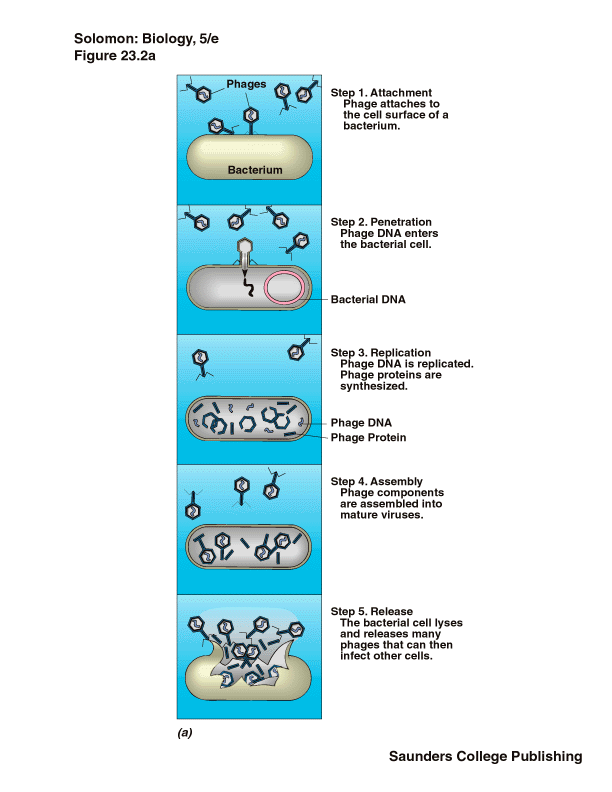
Simply put, viruses that kill their infected host cell are called virulent. The DNA in these type of viruses reproduces through the lytic cycle. When these viruses reproduce, they break open, or lyse, their host cells, resulting in the destruction of the host.


The whole cycle can be complete in 20 - 30 minutes depending on a variety of factors such as temperature. Phage reproduction is much faster than typical bacterial reproduction, so entire colonies can be destroyed very quickly.


Temperate Viruses and the Lysogenic Cycle


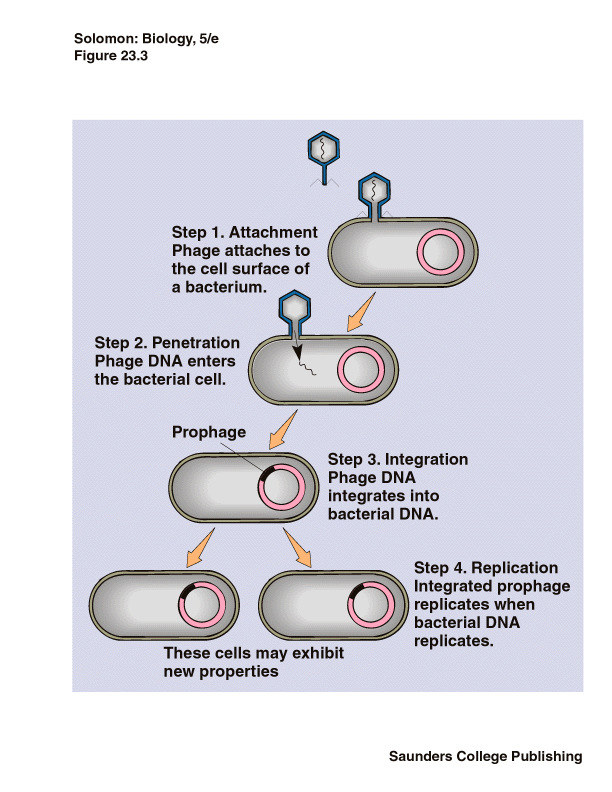
Temperate viruses are those that reproduce without killing their host cell. Typically they reproduce in two ways: through the lytic cycle and the lysogenic cycle. In the lysogenic cycle, the phage's DNA recombines with the bacterial chromosome. Once it has inserted itself, it is known as a prophage. A host cell that carries a prophage has the potential to lyse, thus it is called a lysogenic cell.


T4 phage infecting an E. coli bacterium. Image courtesy of Dr. K. Sathasivan. Used with permission.
Read more / Selengkapnya...

Virus Replication

Replication


A single virus particle (virion) is in and of itself essentially inert. It lacks needed components that cells have to reproduce. Viruses are intracellular obligate parasites which means that they cannot reproduce or express their genes without the help of a living cell. Once a virus has "infected" a cell, it will "marshal" the cell's ribosomes, enzymes and much of the cellular machinery to reproduce. Unlike what we have seen in mitosis and meiosis, viral reproduction produces many, many progeny, that when complete, leave the host cell to infect other cells in the organism.


Bacteriophage binding to the cell wall of a bacterium.
Copyright Dr. Gary Kaiser. Used with permission.

Bacteriophage injecting its genetic material into the bacterium.

Copyright Dr. Gary Kaiser. Used with permission.

The bacteriophage genome replicates

Copyright Dr. Gary Kaiser. Used with permission.
...

Self-Assembly


Interestingly enough, once the viral progeny components are produced by the cellular machinery, the assembly of the viral genome and the viral capsids is a non-enzymatic process. It is usually spontaneous.
The bacteriophage components and enzymes continue to be produced
Copyright Dr. Gary Kaiser. Used with permission

The components of the bacteriophage assemble.

Copyright Dr. Gary Kaiser. Used with permission

Bacteriophage enzyme breaks down the bacterial cell wall causing the bacterium to split open.
Copyright Dr. Gary Kaiser. Used with permission
Specificity
Ah, the beauties of structure and function! Viruses typically can only infect a limited number of hosts (also known as host range). The "lock and key" mechanism is the most common explanation for this range. Certain proteins on the virus particle must fit certain receptor sites on the particular host's cell surface.
Read more / Selengkapnya...

Viruses


Scientists have long sought to uncover the structure and function of viruses. Viruses are unique -- they have been classified as both living and nonliving at various points in the history of biology. What makes them so interesting? Let's look at the structure of viruses.
Structure
A virus particle, also known as a virion, is essentially a nucleic acid (DNA or RNA) enclosed in a protein shell or coat. Viruses are extremely small, approximately 15 - 25 nanometers in diameter.


Adenovirus - Images courtesy of Linda M. Stannard, University of Cape Town.
...

Genetic Material

Viruses may have double-stranded DNA, double-stranded RNA, single-stranded DNA or single-stranded RNA. In different viruses, which of the four is the "genetic material," depends on the nature and function of the specific virus. The viral genome can consist of a very small number of genes or up to hundreds of genes depending on the type of virus. Note that the genome is typically organized as a long molecule that is usually straight or circular.

Protein Coat

The protein coat that envelopes the genetic material is known as a capsid. It can have several shapes: polyhedral, rod or "complex." The protein subunits of the capsid are called capsomeres.


Papillomavirus - polyhedral capsid

Tobacco Mosaic virus - rod-shaped capsid

T4 Bacteriophage - complex capsid

Papillomavirus image courtesy of Linda M. Stannard, University of Cape Town.Tobacco Mosaic virus and T4 Bacteriophage images copyright Dennis Kunkel.


In addition to the protein coat, some viruses have specialized structures. For example, the flu virus has a membrane-like envelope around its capsid. The envelope has both host cell and viral components and assists the virus in infecting its host.


Influenza virus Image courtesy of Linda M. Stannard, University of Cape Town.


Capsid additions are also found in bacteriophages. For example, bacteriophages can have a protein "tail" attached to the capsid that is used to infect the host bacteria.

Bacteriophage - Image copyright Dennis Kunkel.


Read more / Selengkapnya...

Comments

Script Search

My_friendster

Yahoo Messenger

Spider View

Snap Shots

Get Free Shots from Snap.com

Friends